Does your knee hurt when you walk, click, swell, or make stairs difficult? We restore joint function through kinesiotherapy: we strengthen the muscles that stabilize the knee and bring back mobility — without pills, injections or surgery.
Book a Diagnostic Session
Osteoarthritis is neither a life sentence nor a “normal part of aging”. Joint cartilage has no blood vessels of its own: it is nourished through movement, when the surrounding muscles work. When pain makes a person walk less, the muscles weaken, the joint loses support and nourishment — and the pain only gets worse. It becomes a vicious circle.
The knee is one of the most loaded joints: it carries body weight when you walk, run and squat. The most common causes of pain are: — osteoarthritis (gonarthrosis) — thinning and breakdown of cartilage; — arthritis — inflammation of the joint; — synovitis and bursitis — fluid build-up and swelling; — meniscus and ligament injuries. Almost all cases have one thing in common: the muscles that should stabilize the knee are weak or poorly coordinated.
Painkillers and anti-inflammatory drugs relieve the symptom for a while. But they don’t strengthen muscles or restore the joint’s proper mechanics. When the effect wears off, the pain returns — and the muscles have become even weaker in the meantime.
We use kinesiotherapy — recovery through movement. Exercises are performed on special decompression equipment: the joint is unloaded, there is no impact, and the muscles around the knee start working. Blood flow and tissue nutrition gradually improve, swelling goes down, and the knee becomes more stable.
Don’t wait until the pain becomes constant. See a specialist if you notice:
The knee hurts when walking, on stairs, after sitting for long, or even at night.
Morning stiffness, clicking and a “sandy” feeling in the joint.
The knee swells and fluid builds up in the joint.
It’s hard to fully bend or straighten the leg, squat, or get up from a chair.
The knee “gives way” and you don’t feel confident when walking.
You have to protect the leg, limp, or walk with support.
Sharp pain after an injury, severe swelling, redness and fever, or inability to put weight on the leg — see a trauma doctor urgently first.
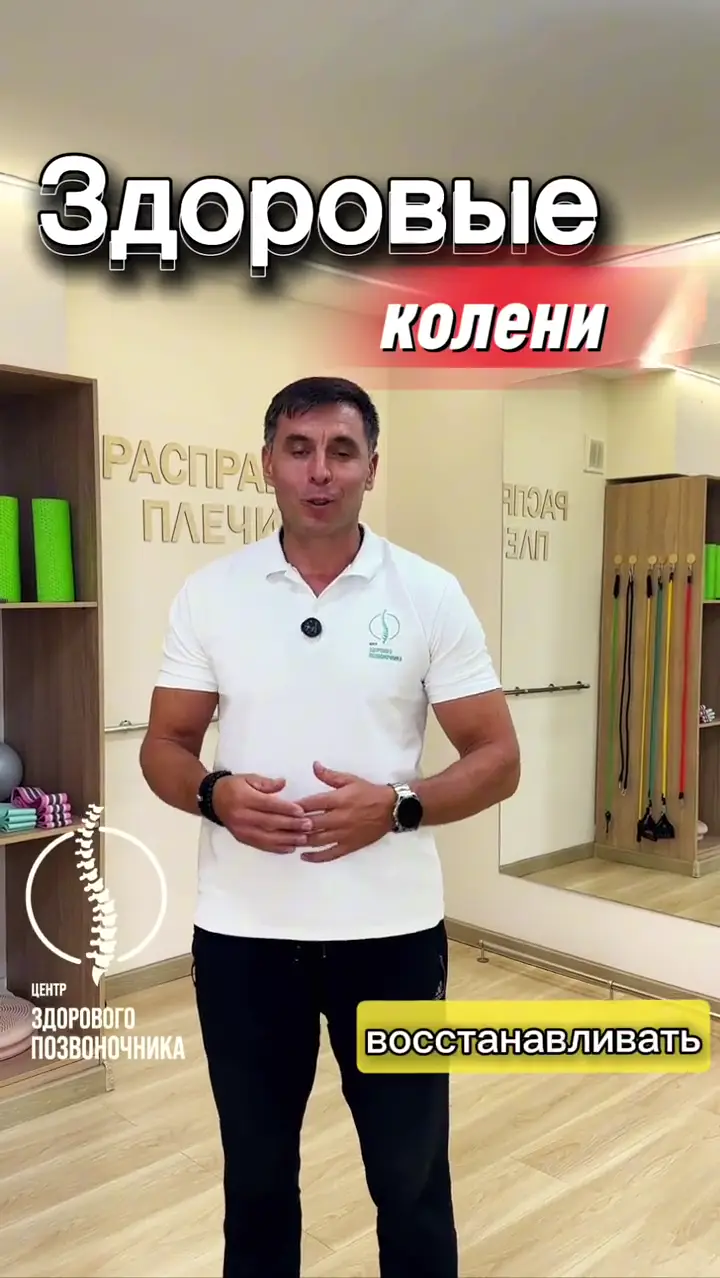
Where to start if your knee hasn’t been loaded for a long time or you are recovering from an injury. Perform slowly and without pain; start with a small range of motion and a comfortable number of repetitions.
Stand with your back to the wall, feet slightly forward. Lift your toes toward you. Strengthens the tibialis anterior and improves ankle control.
From the same position, rise onto your toes. Works the calf and soleus muscles: a strong lower leg helps stabilize the knee when walking.
Use a low step. Slowly step down and back up, making sure the knee doesn’t collapse inward. Works the quadriceps and glutes.
Kneel with your torso and hips in one line. Slowly lean back and return. The quadriceps works eccentrically — this strengthens it and teaches movement control.
There is no single “magic” exercise: the knee needs strength, mobility and control restored gradually. After surgery, with fresh meniscus or ligament injuries, or with severe pain, the load should be selected by a specialist.
People with knee osteoarthritis talk about how their lives have changed
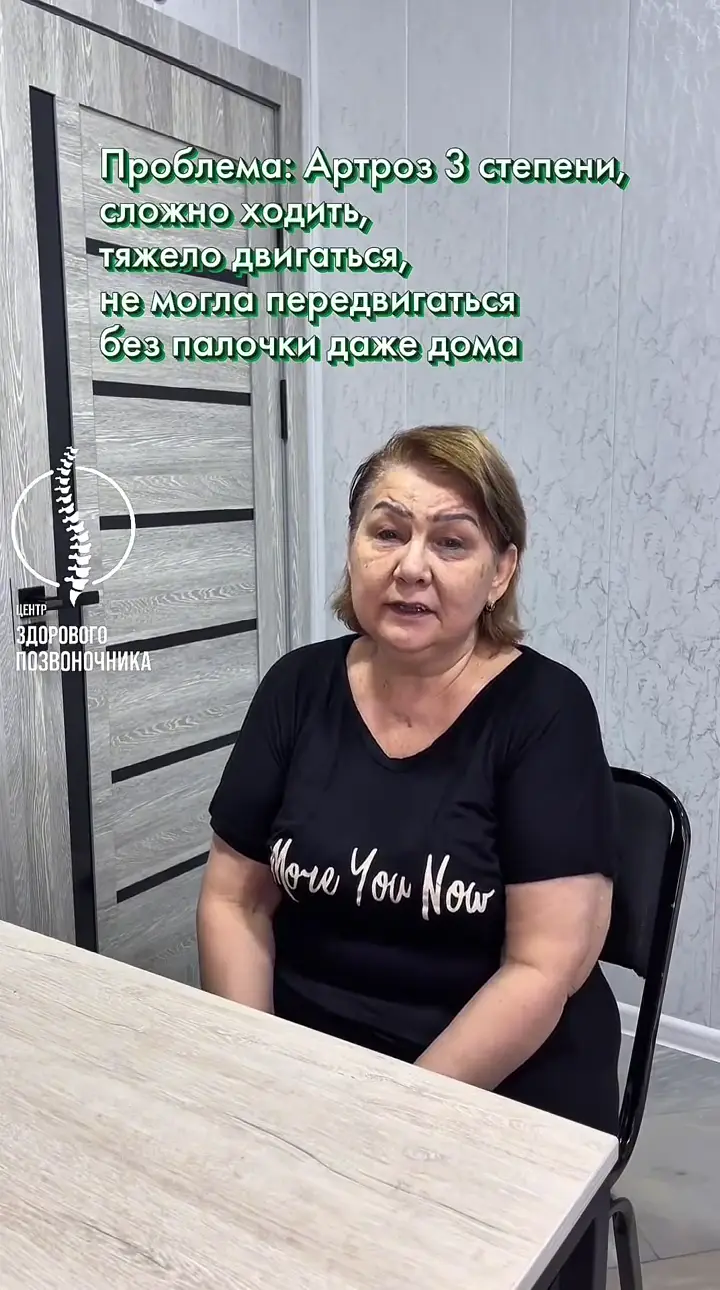
She came when she could barely move even at home and couldn’t manage without a cane. After a trial session she saw that the exercises work, and after the first course she walks without support again.

Diagnosis: knee osteoarthritis. After just 9 sessions she walks without limping, climbs stairs easily, and the stiffness and fear of movement are gone.
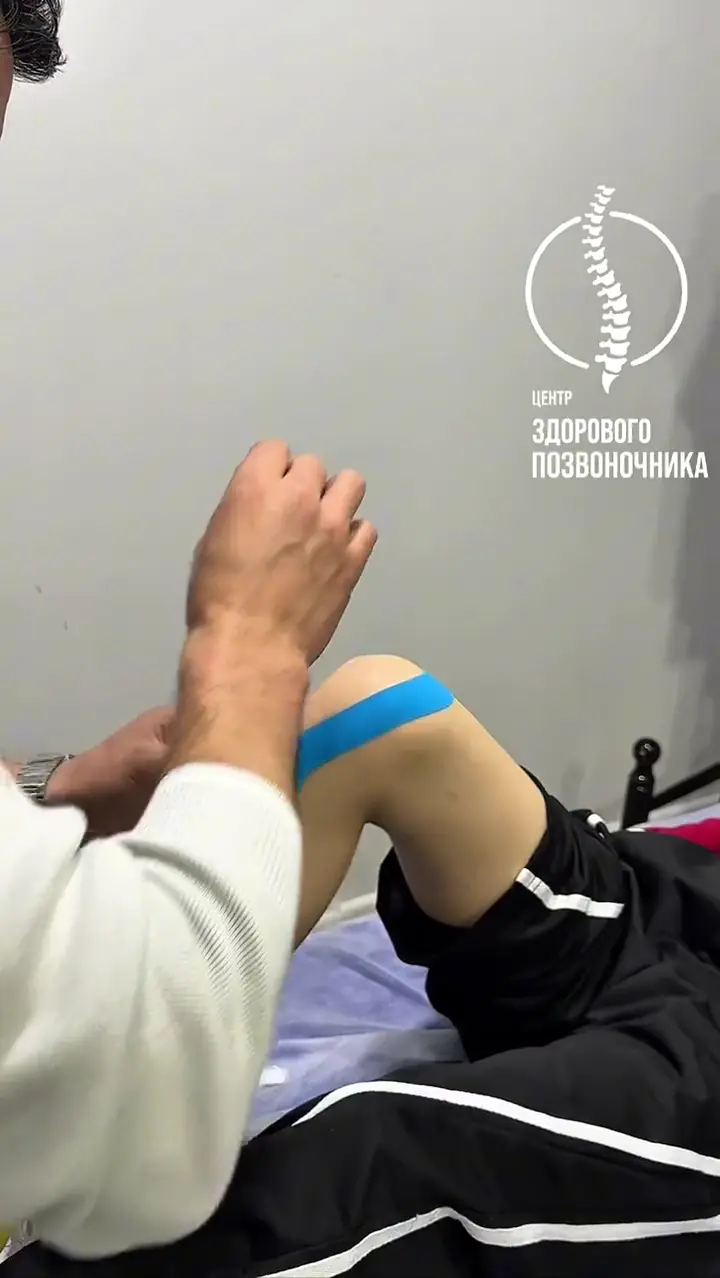
Tape improves microcirculation, reduces swelling and gives a feeling of support. It is not a standalone method but an aid: the best result comes when combined with exercise.
Results are individual and depend on the condition of the joint and how regularly you train.
A specialist reviews your images, performs myofascial diagnostics and functional tests, and finds the cause of the pain.
We select exercises for your diagnosis, age and physical abilities. The load increases only when your body is ready.
You train in the kinesiotherapy hall on decompression equipment. The instructor monitors the technique of every movement.
You learn to support your knees on your own, so the result doesn’t disappear after the course ends.
Leave a request and we will contact you to confirm your appointment and answer all your questions.
Two centers in Tashkent — choose the one convenient for you