A neck hump is not “salt deposits” — it’s the result of disturbed mechanics of the neck and upper back. When the muscles start working again, tension, tissue swelling and the hump itself decrease. We show how it works and select a program for you.
Book a Consultation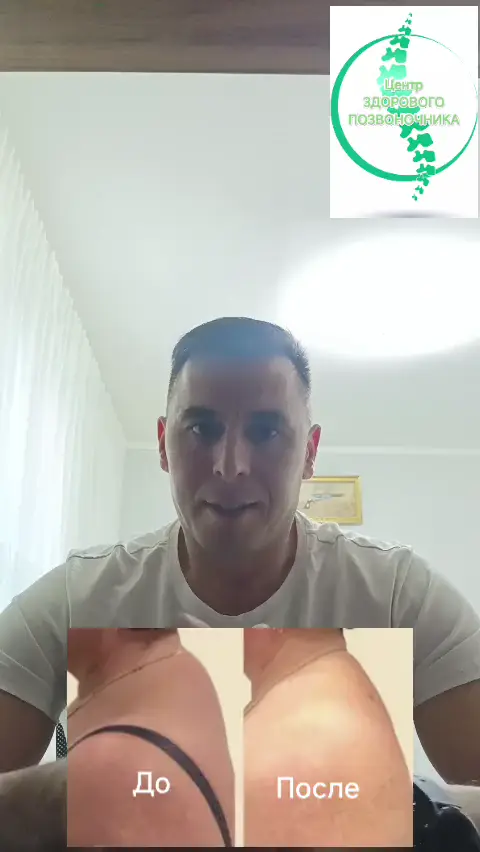
A neck hump is a thickening at the base of the neck, between the neck and the shoulder blades. It’s often mistaken for “salt deposits”, but salt has nothing to do with it. It consists of soft tissues — tense muscles, fascia and fluid stagnation in an area where muscles work poorly.
When the head is constantly tilted forward — toward a phone, monitor or steering wheel — the load on the cervicothoracic junction rises sharply. The deep neck and upper-back muscles “switch off”, the shoulders roll forward, and the superficial muscles become overstrained. Blood flow and lymph drainage worsen, tissues thicken — and the typical hump appears.
It’s not just a cosmetic issue. A neck hump often comes with neck pain and stiffness, tension between the shoulder blades, headaches, fatigue and numb hands. All are signals that the neck is working incorrectly.
It’s not magic, it’s physiology: you work your muscles → microcirculation improves → tissues get nourished → the hump shrinks. We don’t “break up” the hump with massage; we restore the muscles that hold the neck and upper back.
A neck hump rarely comes alone. Pay attention if you notice:
A visible hump around the seventh cervical vertebra.
Seen from the side, the ear is well in front of the shoulder.
Shoulders dropped and shifted forward, the back slouches.
It’s hard to turn your head; the neck gets tired by evening.
Pain at the back of the head, heaviness after computer work.
Tingling and numb fingers, especially in the morning.
Sudden severe neck pain, arm weakness, or speech or vision problems — see a doctor urgently.
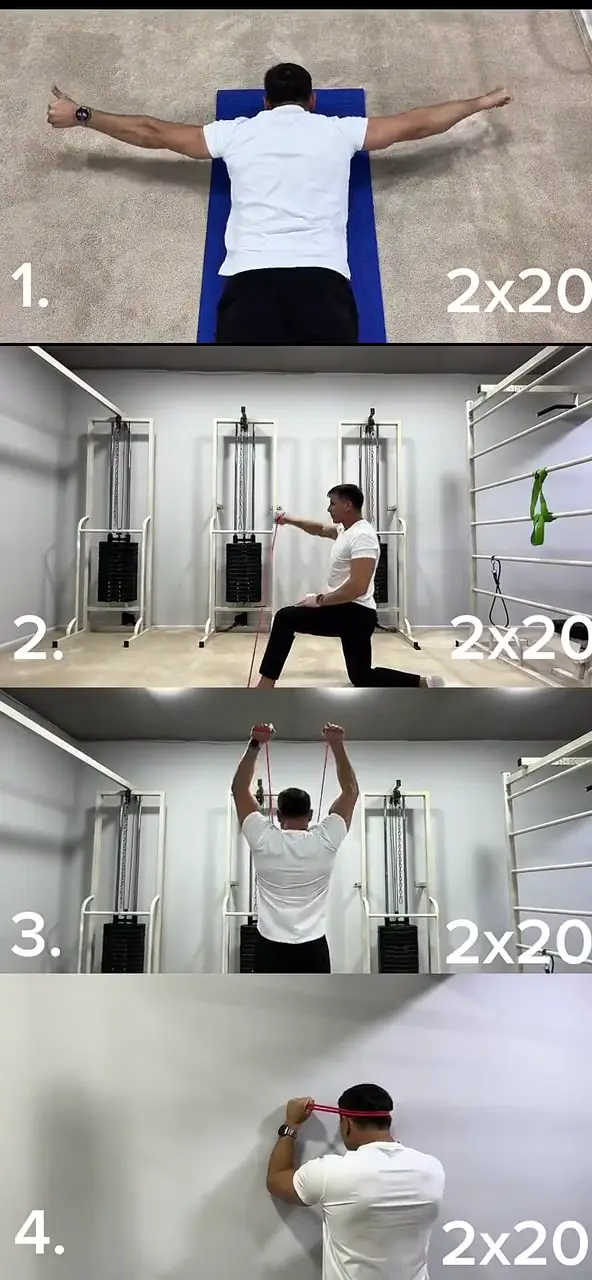
A routine for the neck and upper back with a resistance band. Do each exercise for 2 sets of 20 reps, slowly and without pain.
Lying face down, spread your arms with the band to the sides. Opens the chest and activates the muscles between the shoulder blades.
In a lunge, pull the band or cable toward you, squeezing the shoulder blades together. Strengthens the muscles that keep the shoulders in place.
Raise your arms with the band overhead and stretch it apart, lowering the elbows and squeezing the shoulder blades. Opens the upper back and restores shoulder mobility.
Face the wall with the band behind your head. Gently draw your head back, lengthening the neck, against light band resistance. Activates the deep neck muscles and reduces forward head posture.
Consistency beats intensity. If your neck already hurts or your hands go numb, start after a consultation: a specialist will select a safe load.
Short routines from our sessions

When the shoulder joint loses mobility, the load shifts to the base of the neck. Shoulder and scapula exercises reduce this overload.
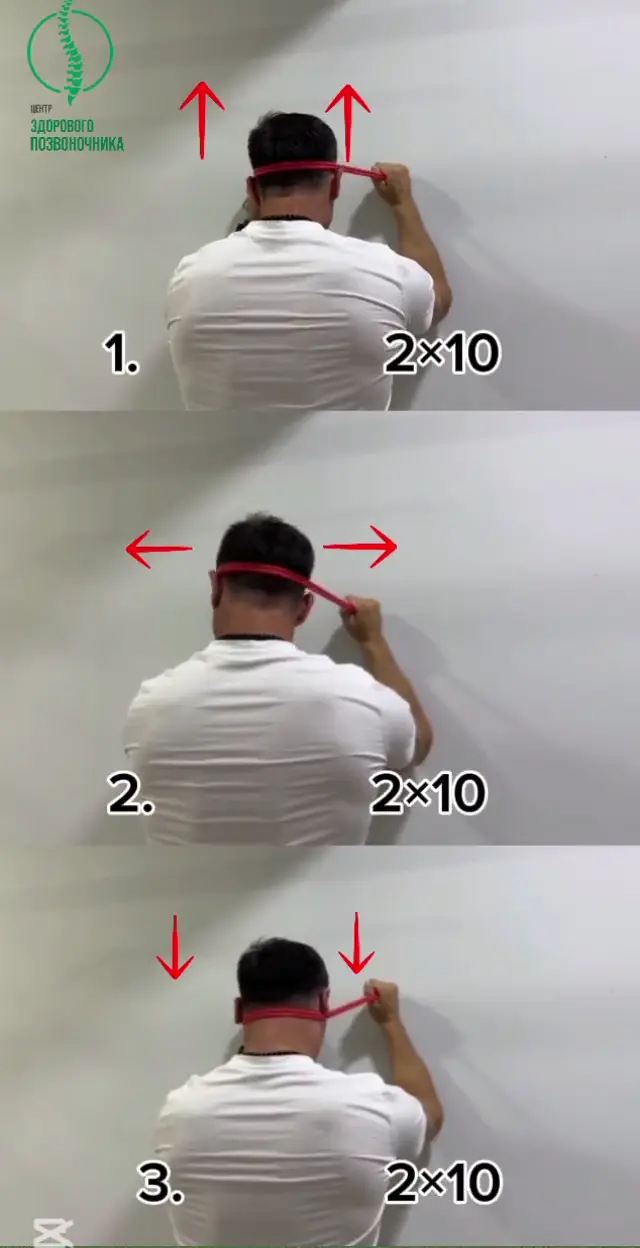
A band and a wall are all you need. Helps with forward head posture, headaches and fatigue.

How to relieve trapezius tension yourself after a working day.
We assess head and shoulder position, neck and upper-back mobility, and find overloaded muscles.
We select exercises for the neck, shoulders and upper back based on your condition.
You train under an instructor’s supervision: correct technique matters more than strength.
We teach you to hold your head and shoulders correctly at the computer, with a phone and behind the wheel.
Leave a request and we will contact you to confirm your appointment and answer all your questions.
Two centers in Tashkent — choose the one convenient for you