Can’t raise your arm above shoulder level, reaching behind your back hurts, the shoulder aches at night? Shoulders are made for movement, and movement is what restores their function. We find the cause of pain and restore mobility through well-chosen exercises.
Book an Assessment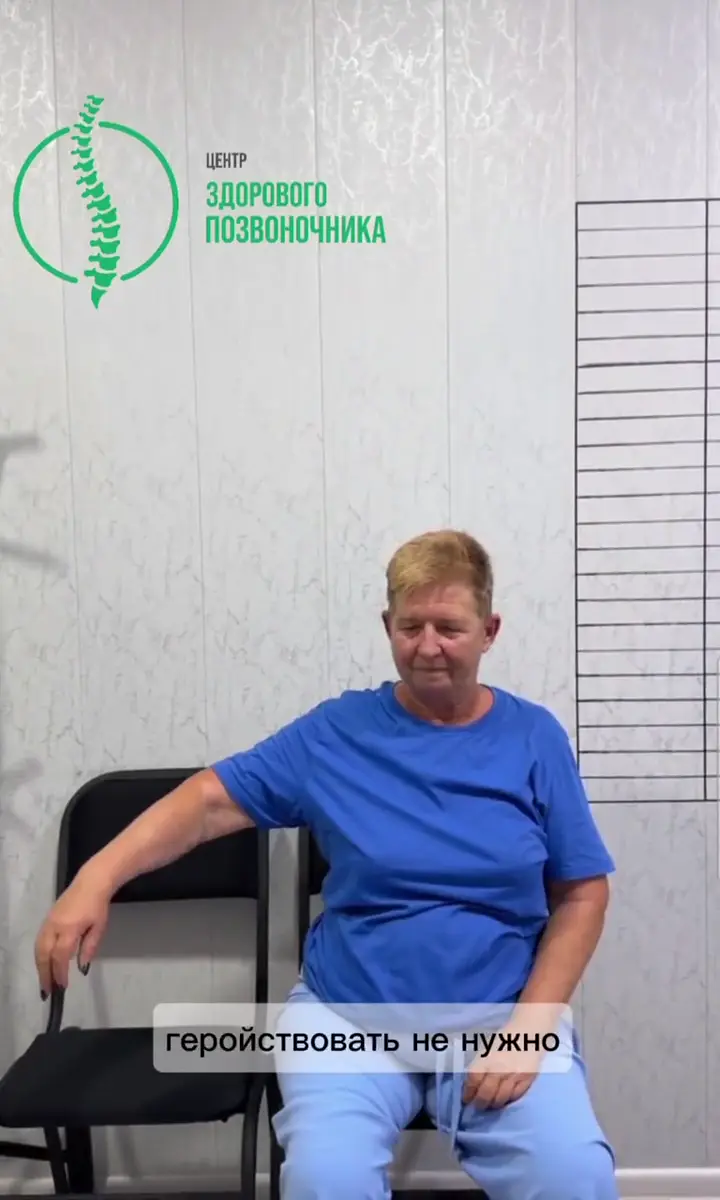
Olga Borisovna came to us after a shoulder injury and prolonged immobilization. She couldn’t raise her arm above shoulder level: pain, fear, limited movement. Regular sessions, special exercises, following the instructor’s advice precisely, patience and effort restored her mobility — today she lifts her arm easily and without pain.
The shoulder is the most mobile joint in the body, and its stability depends entirely on muscles. Pain most often appears when: — after an injury or immobilization the muscles weakened and the joint “froze”; — the shoulder blade moves incorrectly due to desk work and slouching; — the rotator cuff muscles are overloaded or poorly coordinated; — the shoulder was “protected” for a long time and barely moved.
Neither pills nor time alone will bring back freedom of movement. Without load, muscles weaken and the joint gets even stiffer. Recovery is only possible through movement — gradual and properly dosed.
We perform an assessment to understand which muscles and movements are impaired, and select exercises for the shoulder, shoulder blade and upper back. The load increases gradually — only when the joint is ready.
Pay attention if:
It’s hard to raise the arm above shoulder level or move it to the side.
It hurts to reach behind your back, dress or fasten clothes.
The shoulder aches at night; you can’t lie on the painful side.
Tension and pain in the upper back when sitting for long.
The edge of the shoulder blade lifts off the back — a “winged” scapula.
The shoulder clicks and the arm tires quickly under load.
Sharp pain after a fall or blow, joint deformity, inability to move the arm — see a trauma doctor first.
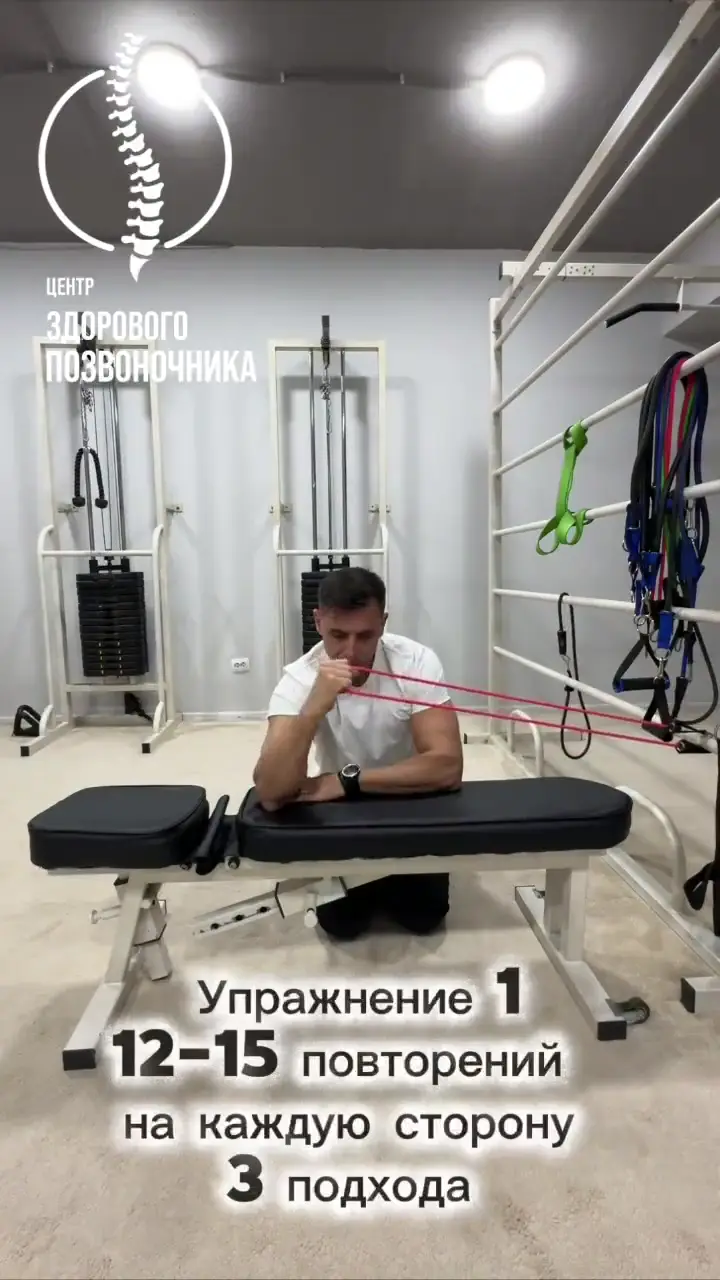
Modern life deprives shoulders of movement — hence stiffness and pain. These exercises improve mobility and restore blood flow and nourishment of joint tissues. Do 12–15 reps per side, 3 sets.
Sitting at a bench with your elbow supported, rotate the forearm outward against band resistance.
Lying on a bench, pull the band from behind your head to your chest with straight arms. Stretches and strengthens the shoulder girdle.
Lying on your side with a light dumbbell, rotate the forearm upward, keeping the elbow against your body.
Standing, raise your arm overhead with a light weight without shrugging the shoulder toward the ear.
These exercises suit both those who already feel stiffness and those who want prevention. With acute pain or after an injury, the load is chosen by a specialist.
Videos from our sessions
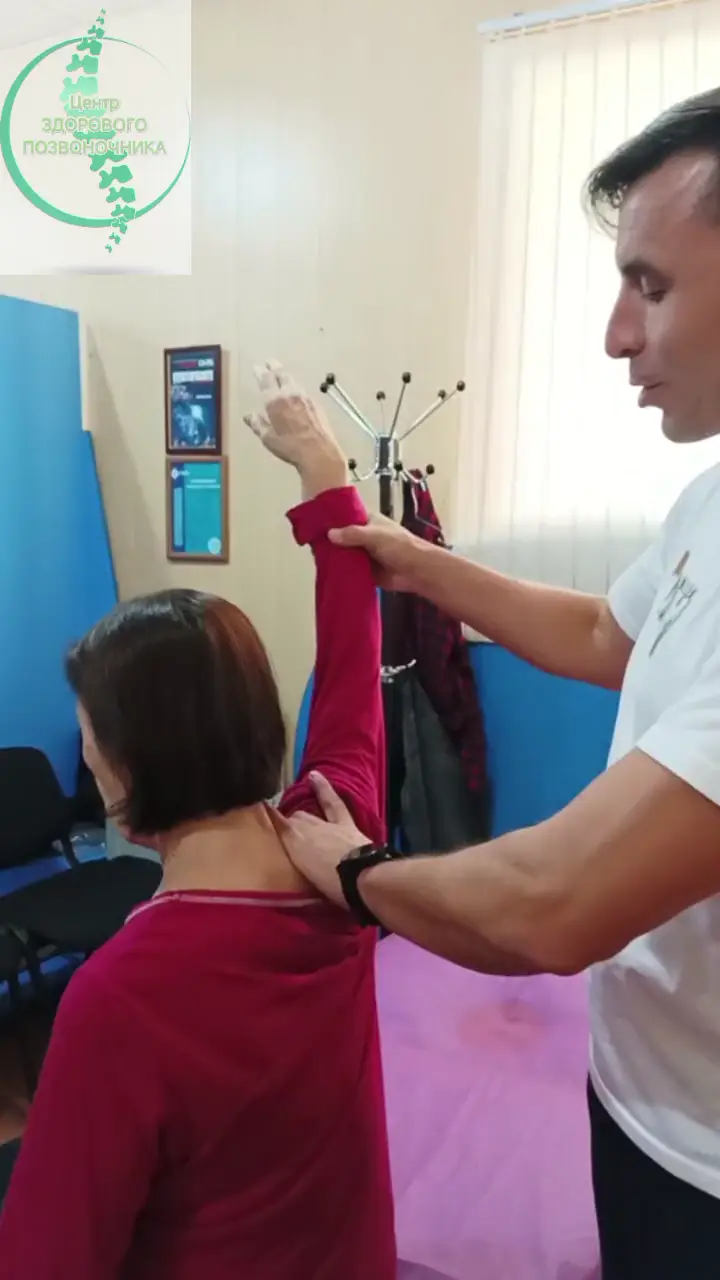
What shoulder work looks like in a session: the instructor helps restore movement.
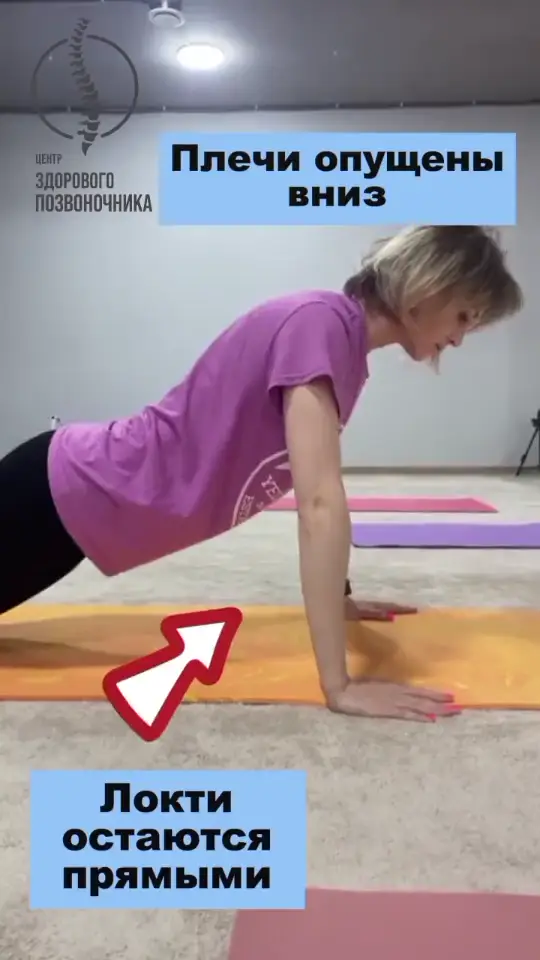
Why the shoulder blade lifts off the back with desk work and how to deal with it.

A simple technique to relieve tension around the shoulder blade after a working day.
We check range of motion, muscle strength and shoulder blade function, and review your images.
We select exercises for the shoulder, shoulder blade and upper back based on your condition.
The instructor monitors technique and increases the load gradually.
We give home exercises so the shoulder stays mobile.
Leave a request and we will contact you to confirm your appointment and answer all your questions.
Two centers in Tashkent — choose the one convenient for you