Is your child slouching, with one shoulder higher, protruding shoulder blades, or a back that tires quickly? A child’s body is flexible and responds well to correction — if you start in time. We assess posture and design exercise programs for children and teenagers.
Book a posture check for your child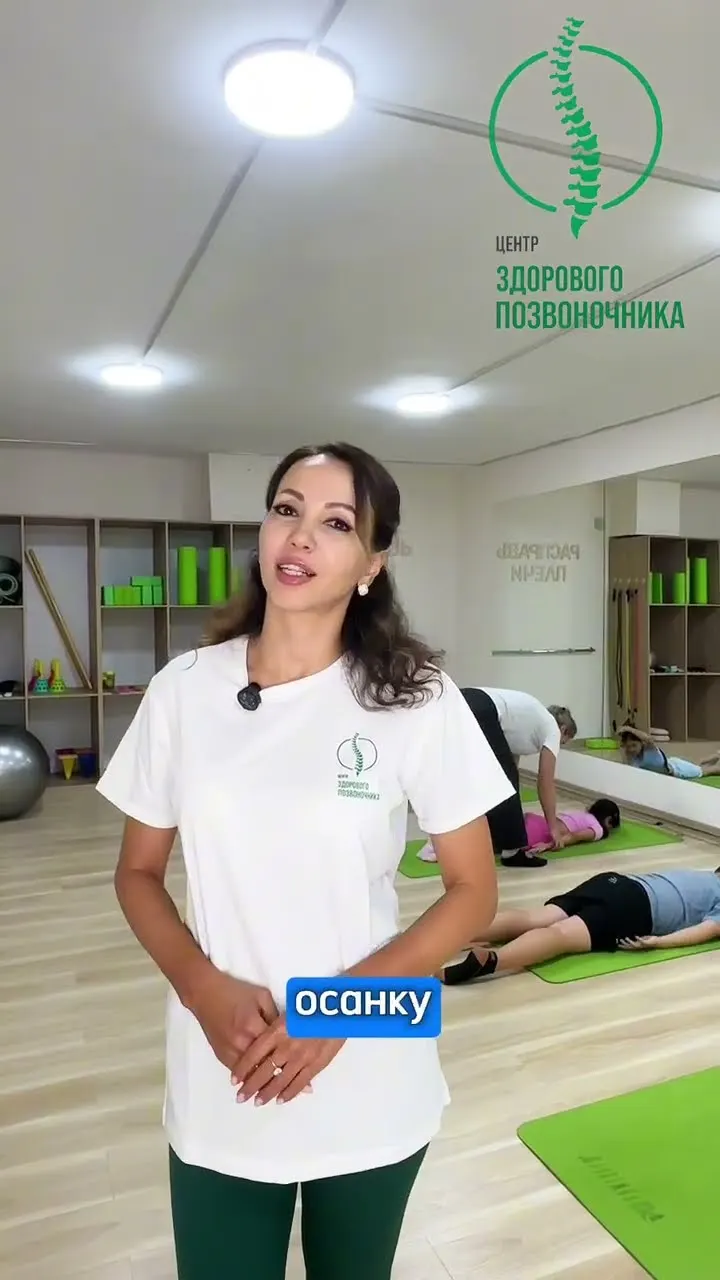
Scoliosis doesn’t appear overnight. It starts with small things parents don’t always notice: one shoulder slightly higher, slouching, a protruding chest, flat feet or knock-knees. As the child grows, these changes become more visible.
Long hours at a desk, a heavy backpack, homework and gadgets. Children move much less, and the muscles that should support the spine stay weak without load. Good posture is not a habit of “sitting up straight” — it is the result of muscles doing their job.
Reminders to keep the back straight work for a few seconds. A brace props up the spine temporarily, but the muscles underneath get even weaker. Posture changes through movement: when a child strengthens the muscular corset and learns to control the body correctly.
We work not with the “shape of the back”, but with muscle function, breathing and movement balance. Exercises are chosen for the child’s age and condition and take place in a calm, friendly atmosphere — without scare tactics or forcing the body.
Ask your child to stand straight and look from behind and from the side. Reasons to see a specialist:
Or one shoulder blade sticks out more — a sign of asymmetry and possible scoliosis.
Rounded back, shoulders rolled forward, head “reaching” toward the screen.
The pelvis tilts forward with a deep lower-back arch — a sign of hyperlordosis.
The gap between the arm and the waist differs on the left and right.
The foot rolls inward, the legs are X-shaped — the whole posture depends on the feet.
The child complains of back, neck or head pain after school and can’t sit for long.
A self-check doesn’t replace an examination: a wall test or photo only suggests there may be a reason to pay attention. A diagnosis is made by a specialist.
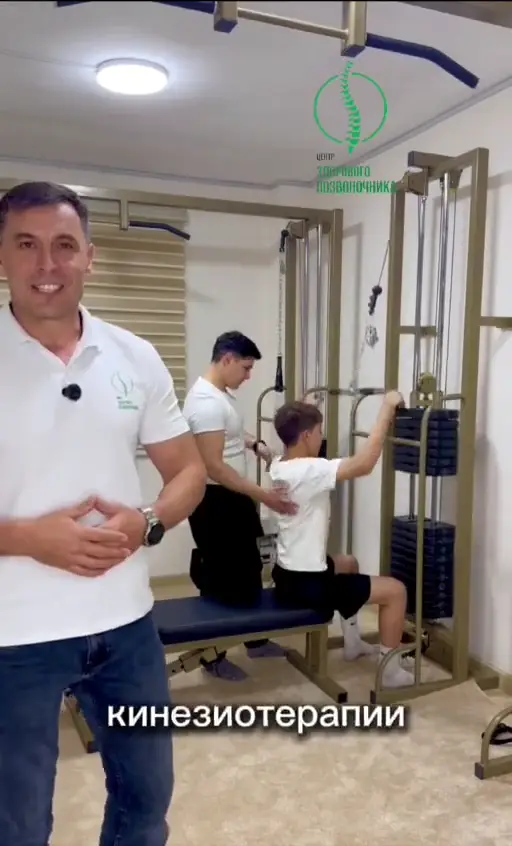
Adolescence is when the body takes shape. Without the right load now, problems will show up in adulthood. At our center, teenagers do general physical training that is safe for the spine.
No barbell on the shoulders and no weights pressing on the spine. Strength develops safely.
We strengthen the deep back muscles, abs and glutes — the spine’s natural support.
We teach correct movement and balance and develop coordination.
We work with the feet: the position of the knees, pelvis and spine depends on them.
Poor posture can even affect the position of the neck and jaw. That’s why our work with teenagers is comprehensive: posture, feet and spine together.
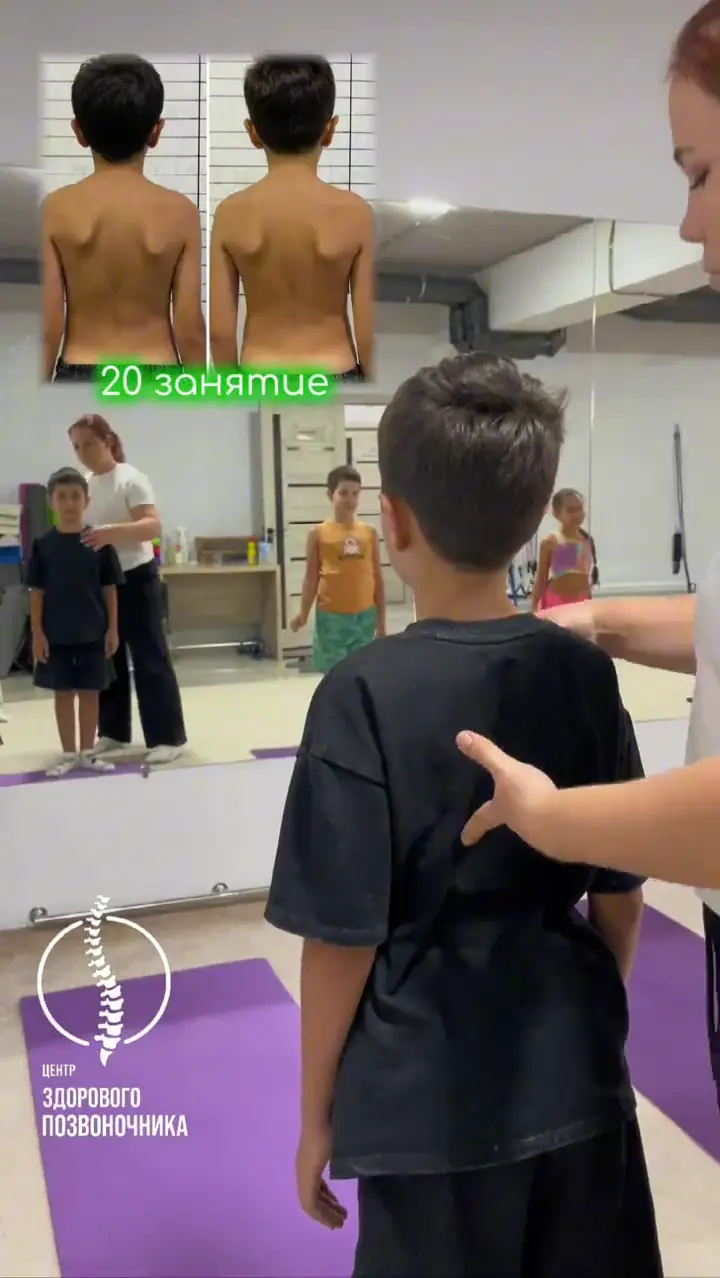
Photos “before” and “after” a course. In between — regular sessions, an individual program, instructor supervision and the child’s own effort.
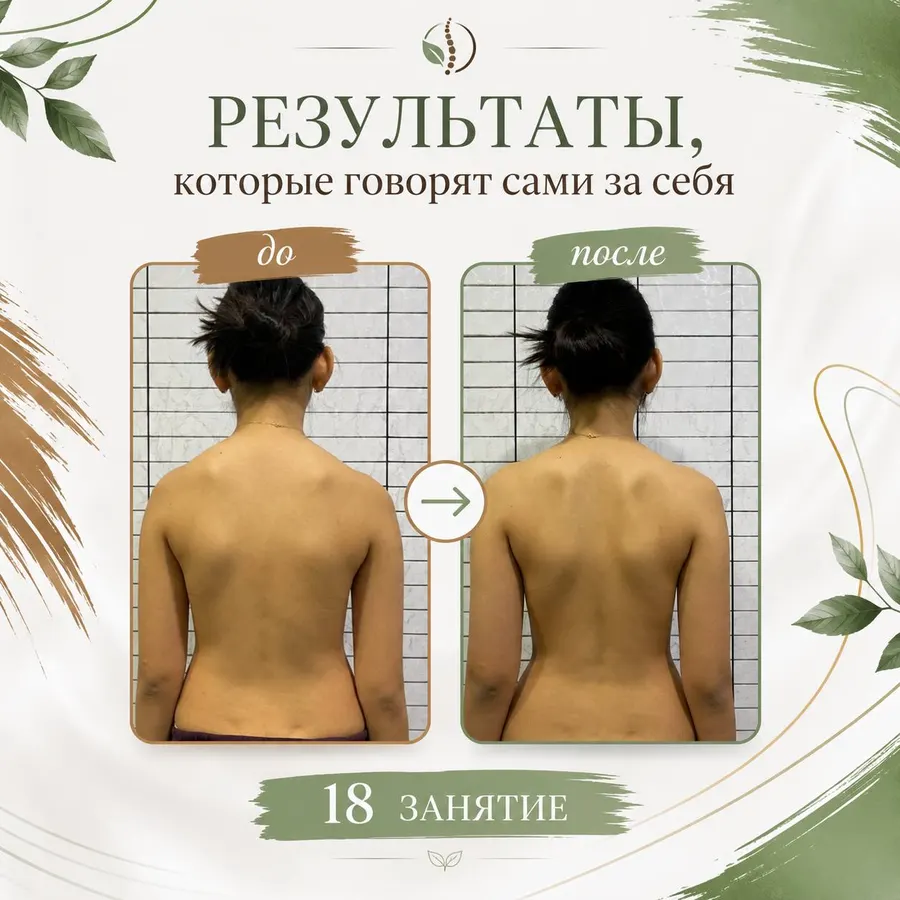
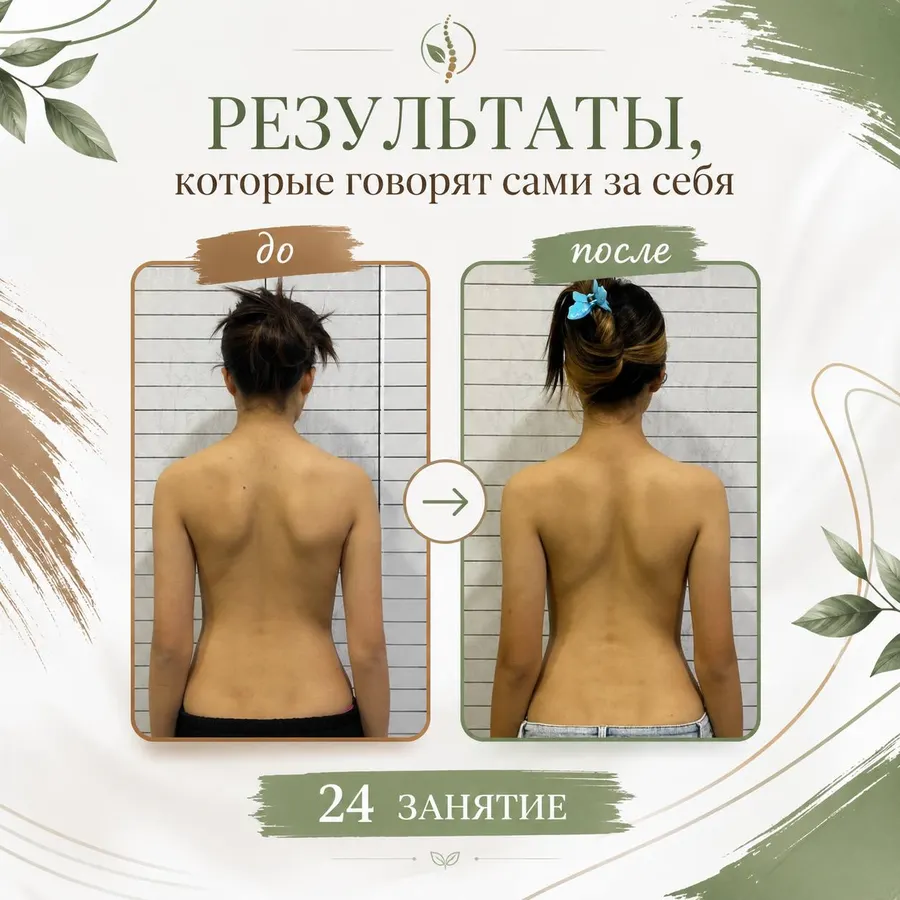
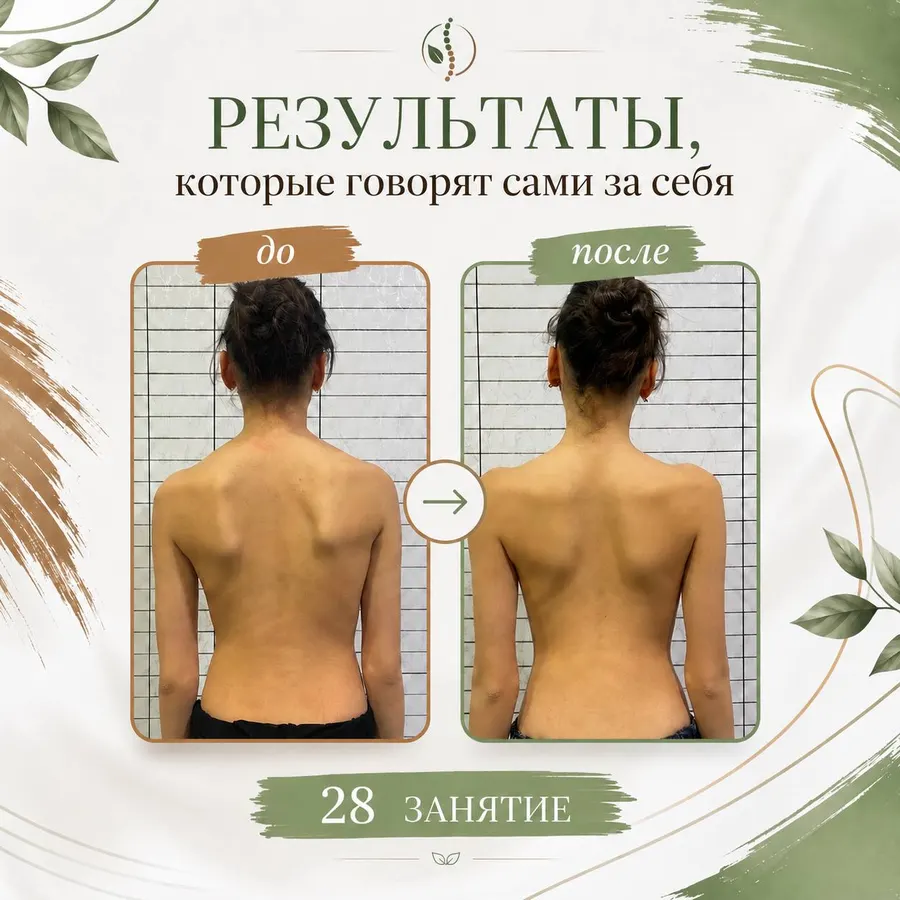
When the result is visible, no words are needed.
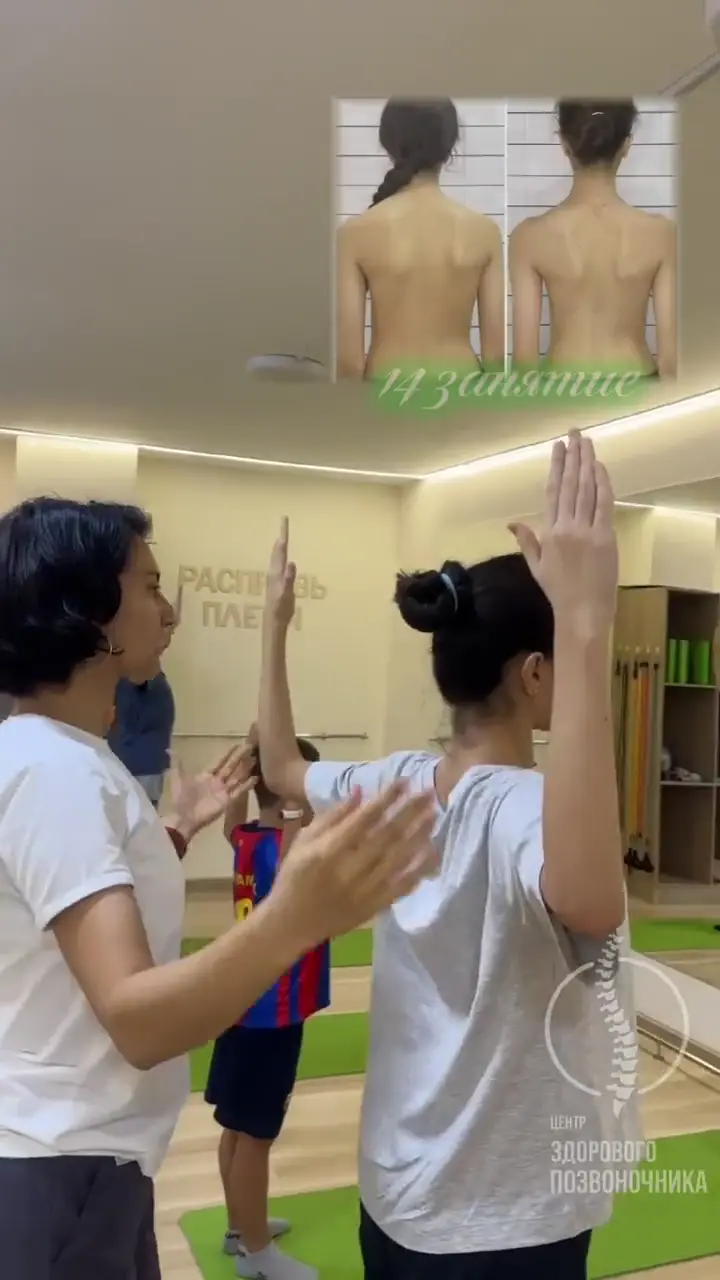
Not just “before” and “after”, but the path that led to the change.
Every child’s result is individual and depends on the severity of the problem and how regularly they attend.
My 11-year-old daughter completed an exercise therapy course, and the result exceeded all expectations. When we first came, she had a noticeable tilt to the right and a slouch: her right shoulder, shoulder blade and hip were clearly higher than the left side, and she was diagnosed with grade 1 kyphoscoliosis. Honestly, I worried that such asymmetry would be hard to correct. But thanks to skilled specialists, an individual approach and well-chosen exercises, her posture was literally transformed over the course: symmetry appeared, she holds her back confidently and no longer slouches. Special thanks for the warmth and support at every session.
I want to express huge gratitude to the center for its professional and comprehensive approach. The result is visible to the naked eye: the shoulders are level and the back is straighter. Sessions are held in a comfortable, friendly atmosphere, all exercises are chosen individually and done under specialists’ supervision. You can see they truly work for results. I recommend it wholeheartedly!
We assess posture, the position of the pelvis and shoulders, the feet, mobility and muscle strength. If needed, we review X-rays.
We create a plan based on age and severity and explain to parents what we do and why.
The child trains under an instructor’s supervision. Exercises alternate with games to keep it interesting.
We give home exercises and teach the child to take care of their spine after the course.
Leave a request and we will contact you to confirm your appointment and answer all your questions.
Two centers in Tashkent — choose the one convenient for you