Scoliosis in your child or spinal curvature in an adult? At the Healthy Spine Center, we correct posture and align the spine without surgery — through wellness gymnastics and individual recovery programs.
Book a Consultation
Scoliosis is not just a 'crooked back'. It's a muscle imbalance: some muscles are constantly tense and pulling, while others are weak and not working. Because of this, the spine starts shifting to one side. And as long as this imbalance persists — the curvature won't go away. People often think they can just 'keep their back straight' or that it will straighten itself over time. It won't — because the problem is not in how you stand, but in how your body works.
That's exactly what we work with. Through exercises we restore muscle balance, eliminate the tilt and return the body to its correct position.
The result is not just 'it got straighter'. It's when the body starts working properly and holds this result.
Scoliosis often develops unnoticed, especially in children. Pay attention if you notice:
The shoulder line is tilted and clothes sit unevenly.
One shoulder blade sticks out more or sits higher than the other.
The gap between the arm and the waist is noticeably larger on one side.
One side of the pelvis is higher, so one leg may seem shorter.
When bending forward, one side of the back is higher than the other — a “hump” appears.
The back tires quickly from sitting and standing, and discomfort appears.
Pronounced or rapidly progressing scoliosis in a child should be monitored by an orthopedic doctor. Sessions at our center complement this monitoring rather than replace it.
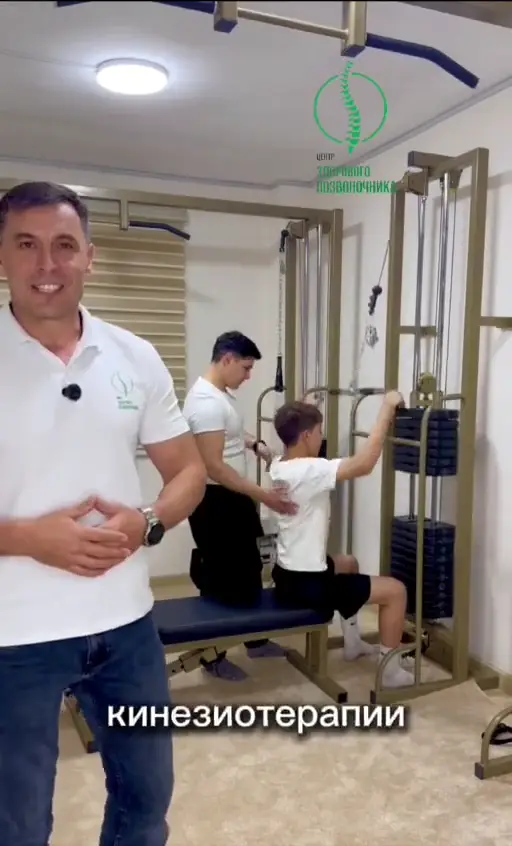
How teenagers can build strength without overloading the spine. During adolescence the body grows rapidly, so the load should strengthen the back rather than press on it.
No barbell on the shoulders and no weights pressing down on the spine. Strength develops without extra load on the discs.
We work on the back, abdominal and gluteal muscles — they hold the spine in the correct position.
The instructor watches the technique of every exercise and adjusts the load to the teenager’s age and condition.
Exercises are done without pain. We select a specific program for a child after diagnostics.
Before-and-after photos of our young clients and short videos from our sessions
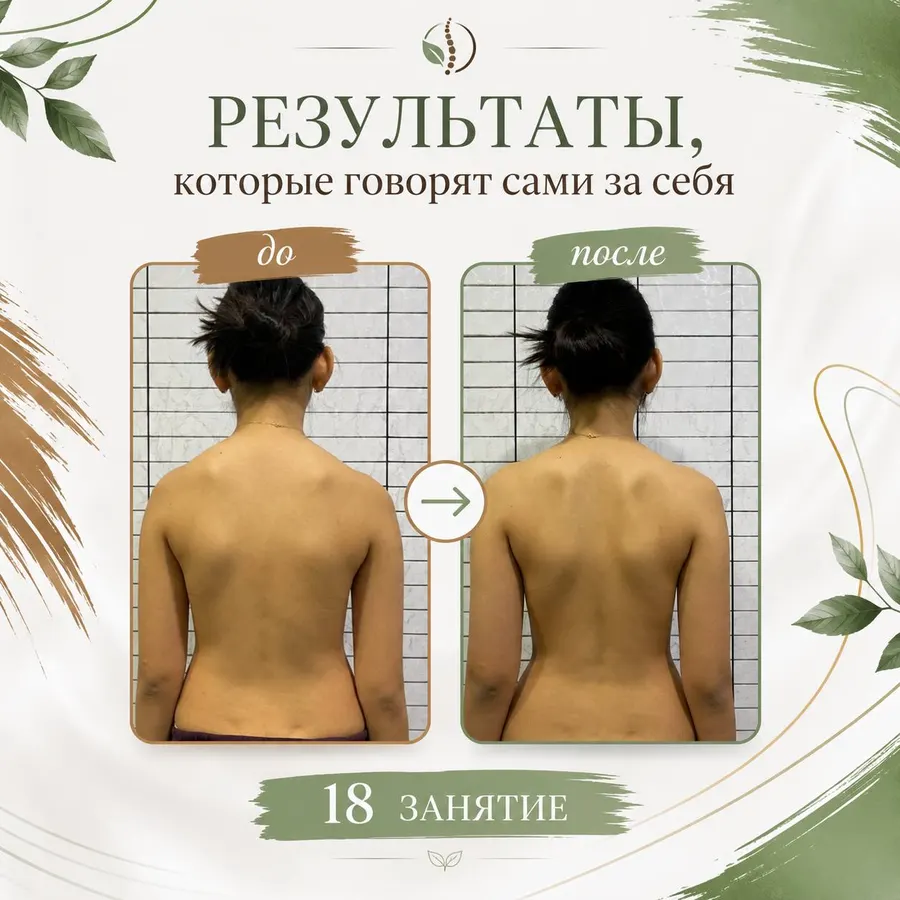
Before-and-after photos of 18 sessions on an individual program.
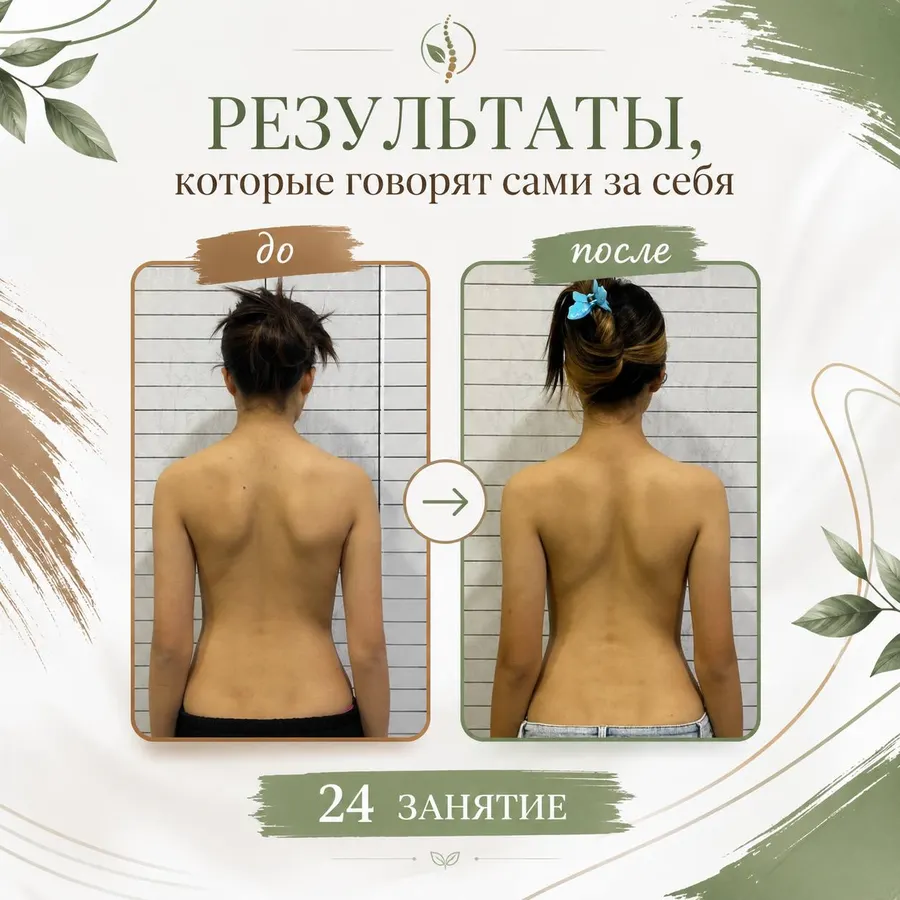
Before-and-after photos of 24 sessions. In between — regular work with an instructor and the child’s own effort.
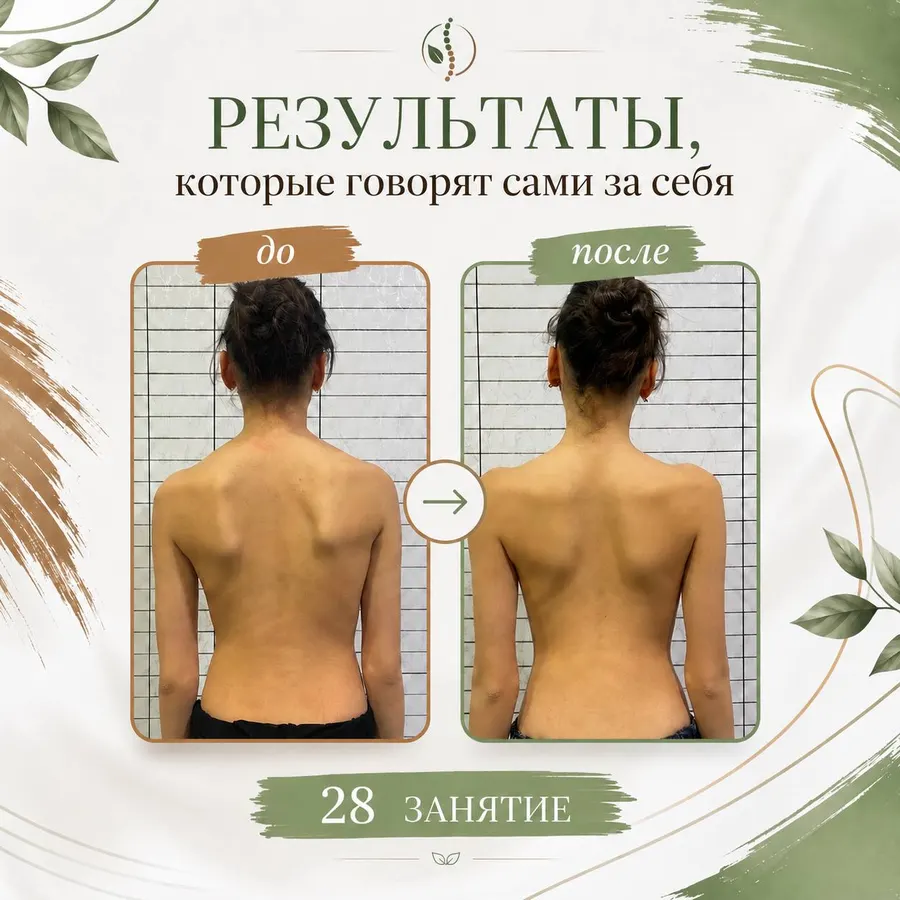
Before-and-after photos of 28 sessions on an individual program.
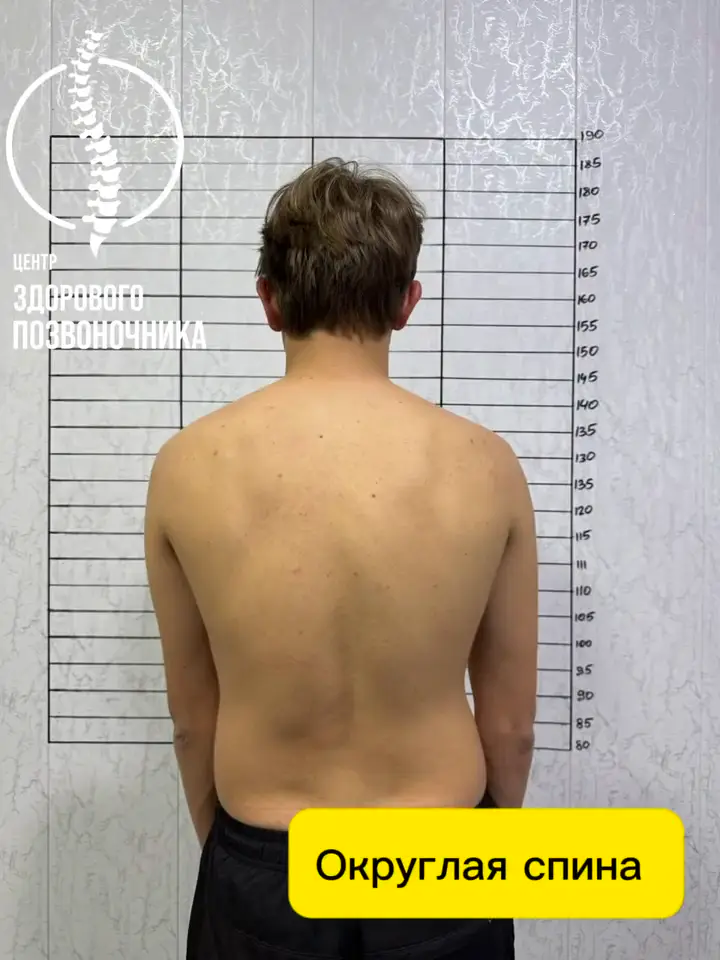
A simple posture check you can do at home. It’s not a diagnosis, but a reason to take a closer look at your child’s back.
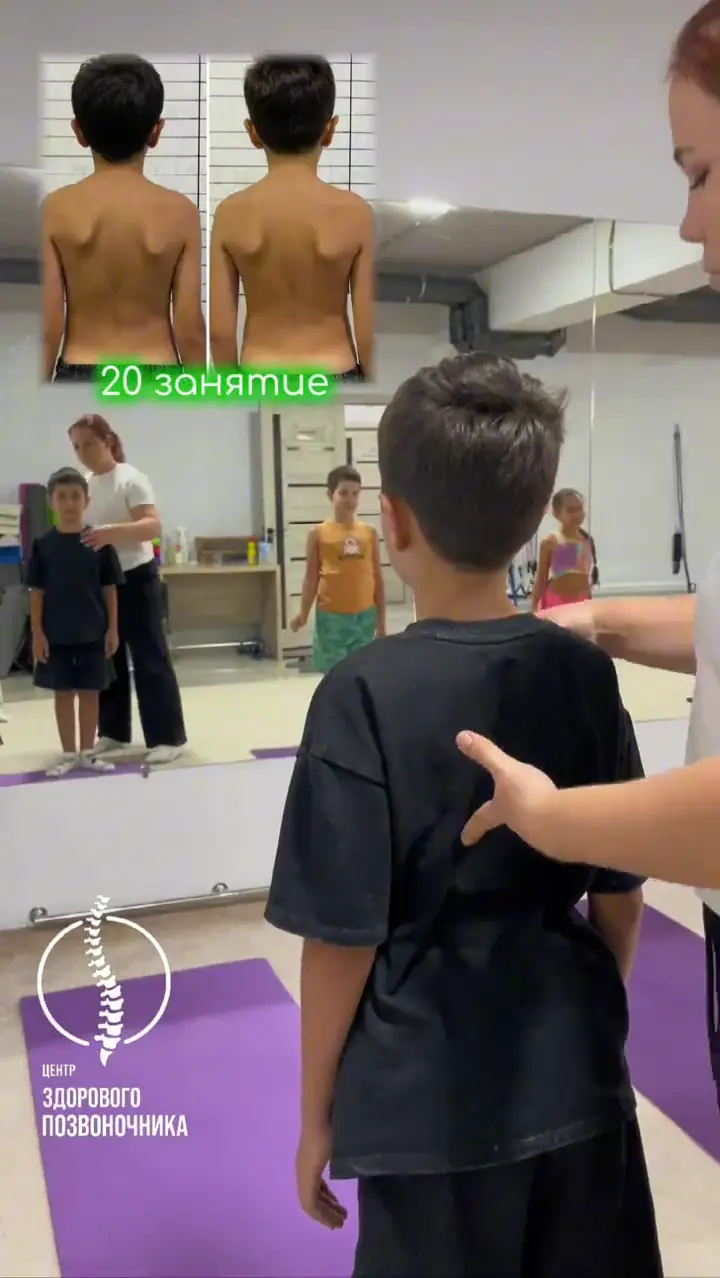
The result of regular sessions on an individual program.
My daughter, 11 years old, completed an exercise therapy course and the result exceeded all expectations. When we first came, she had a noticeable tilt to the right and a stoop. Her right shoulder, shoulder blade and iliac crest were noticeably higher than the left side; kyphoscoliosis of the 1st degree was identified. … after the course her posture was literally transformed. In the “after” photo — straight posture, symmetry has appeared, my daughter holds her back confidently and no longer slouches.
We completed the course, my daughter had been diagnosed with grade 1–2 scoliosis… And now you can’t recognize my daughter’s back: her posture, her spine has straightened, the hump that was growing from the curvature is gone. Thank you so much, Rustam, for your individual approach, your patience…
Chronic spinal pain caused by grade 3–4 scoliosis, with frequent flare-ups, haunted me for many years. After two courses of sessions my overall physical well-being improved, and the sharp pain almost disappeared. Words cannot express the feeling of freedom from pain and freedom of movement!
A consultation, review of your existing MRI, X-ray and other test results, myofascial diagnostics and functional tests: we assess posture, symmetry and muscle imbalance.
We select wellness gymnastics or kinesiotherapy on special decompression machines — taking into account age and the type of curvature.
The basic course is 20 sessions in the kinesiotherapy hall or 30 sessions of wellness gymnastics. The instructor controls technique, and we adjust the load based on how you feel and your progress.
We give you home exercises and recommendations: how to sit, carry a backpack and maintain posture in everyday life.
Leave a request and we will contact you to confirm your appointment and answer all your questions.
Two centers in Tashkent — choose the one convenient for you