Pinched nerve, pain radiating down the leg, pulling from the lower back? At the Healthy Spine Center we address the cause of nerve compression without surgery — through individually tailored kinesiotherapy and wellness gymnastics.
Book a Consultation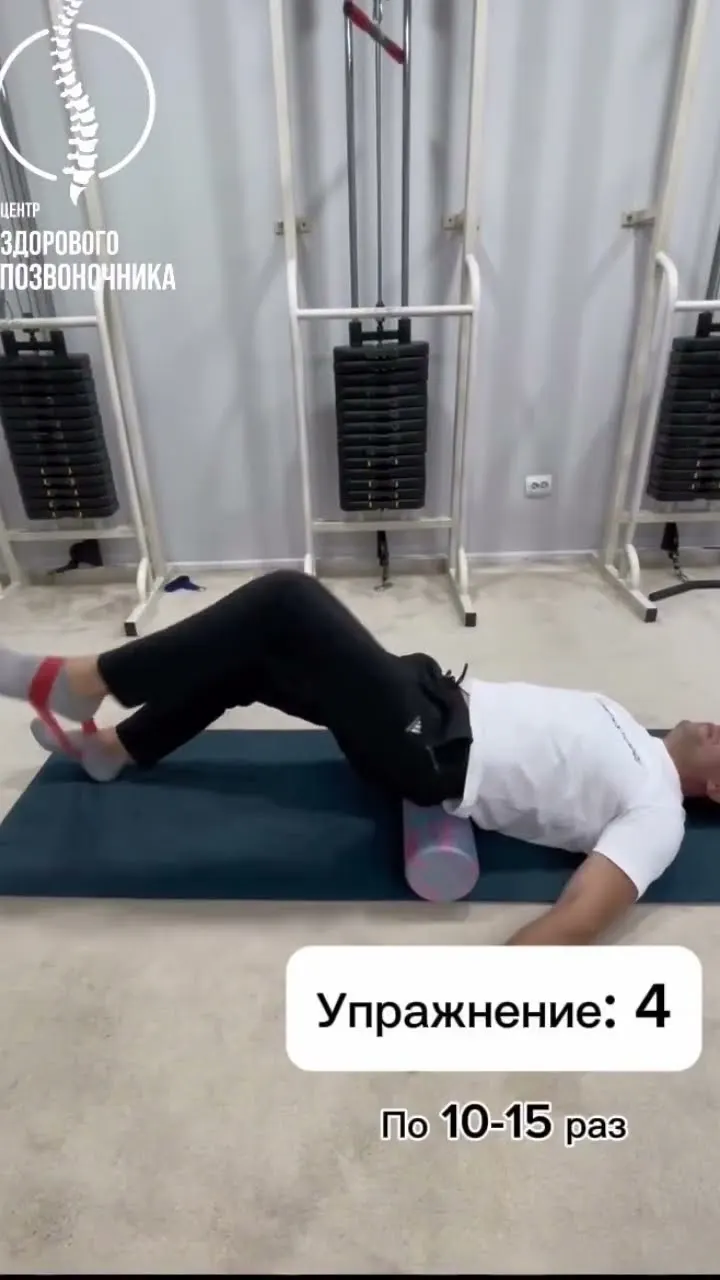
Pain radiating to the leg? Pulling in your lower back, numbness or weakness? It's important to understand the main point: in most cases the nerve itself isn't actually pinched. If the nerve really were compressed, there would be serious disturbances: — loss of strength — pronounced numbness — movement problems But most often none of this is present.
What's really happening? Along the nerve, muscle spasm and imbalance develop. Muscles become stiff, movement is disrupted, pressure builds on surrounding tissues — and pain appears that 'radiates' along the nerve. In other words, the problem isn't in the nerve — it's in the muscles. And until that's addressed, the pain keeps coming back. At our center we don't just mask the pain. We remove the cause. Through movement, not pills.
Just waiting — it won't pass. Act correctly — and the body starts to recover.
Most often these sensations come from muscle spasm and imbalance. Pay attention if you notice:
Pulling or shooting pain from the lower back or buttock down the leg.
Aching pain in the buttock or sacral area that gets worse with prolonged sitting.
It's hard to bend over or straighten up after sleep or long sitting.
The lower-back and gluteal muscles feel dense and tense, and are tender to pressure.
Mild tingling, 'pins and needles' or heaviness that change with body position.
The pain builds after a working day, a long drive or desk work.
Increasing leg weakness, loss of sensation in the groin area, problems with urination, or severe pain after an injury — see a doctor urgently.
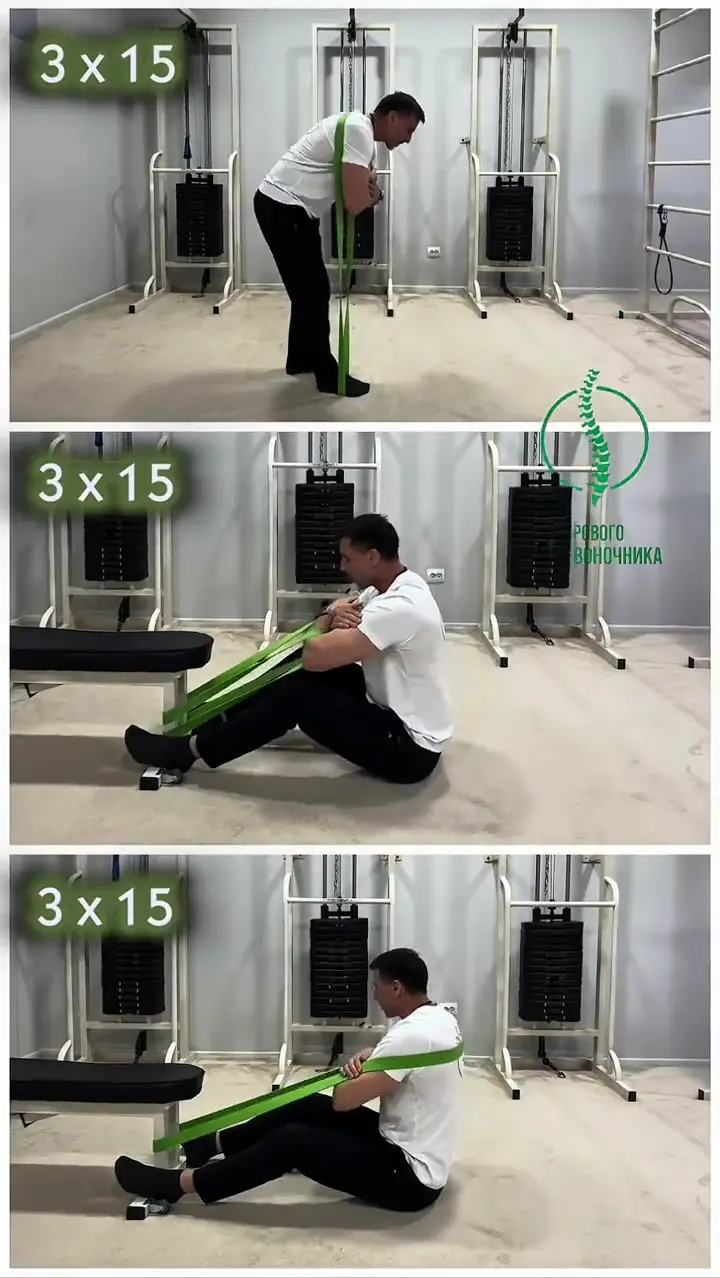
Once the spasm eases, the lower-back and gluteal muscles need strength to support the spine. These band exercises engage the glutes and deep back muscles. Do 3 sets of 15 reps, slowly and without pain.
Standing on the band, bend forward with a straight back, pushing your hips back, then straighten up using your glutes.
Sitting on the floor with legs straight, pull the band to your waist, squeezing the shoulder blades and keeping your back straight.
In the same position, pull the band to your chest without rounding your lower back.
If an exercise makes the leg pain worse, stop. With acute pain it's better to start after an assessment: a specialist will select a safe load.
Short videos from our specialists
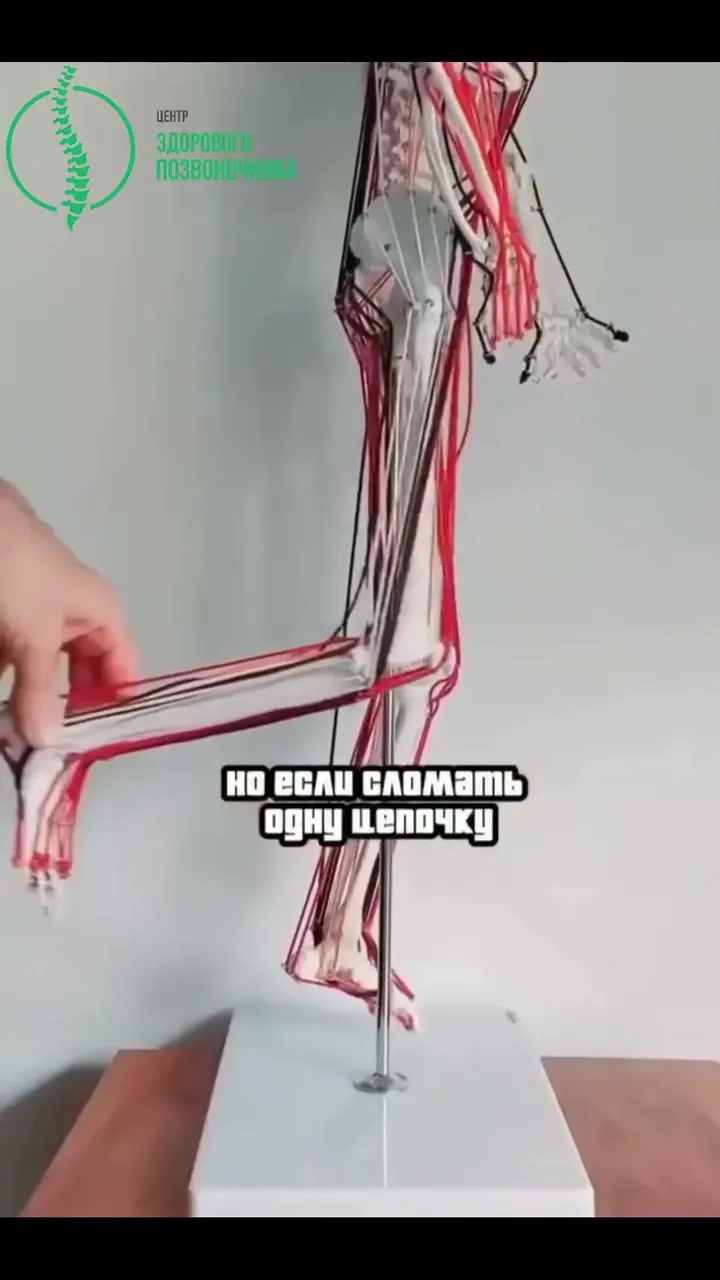
Muscles and joints work as a single chain, so where it hurts and what causes it often don't match.
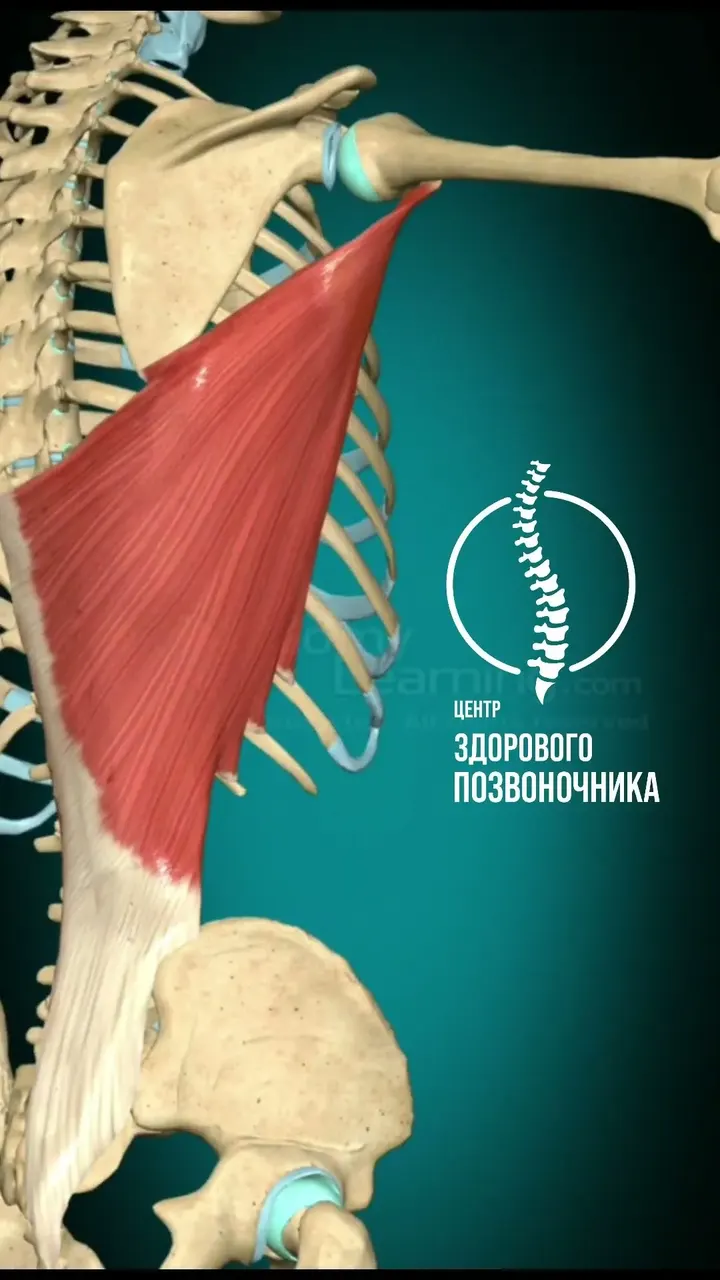
We show clearly how the shoulder, lower back and pelvis are connected — and why with back pain it matters to look at the whole body.
A functional test you can do on your own. All movements should come easily — don't force them.
Before coming to the Center, for half a year I couldn't walk, stand and, most importantly, sit. … During the first course at the center I came by taxi lying down. Of course it wasn't easy at all — there were tears, pain and worry. But by the end of the first course things started to improve, and I was able to sit longer and come to the course on my own. I completed 2 full courses at this center, and after them I was able to fully return to my previous life.
Before I came, I had severe lower back pain — so bad that I felt every bump and pothole while driving. But hard work and discipline helped ease my condition, for which I want to express huge gratitude to Rustam aka, he is a real professional at what he does…
A consultation, review of your existing MRI and other test results, myofascial diagnostics and functional tests — we find the muscles that cause the pain.
We select wellness gymnastics or kinesiotherapy on special decompression machines.
The basic course is 20 sessions in the kinesiotherapy hall or 30 sessions of wellness gymnastics. The instructor monitors your technique, and we adjust the load based on how you feel and your progress.
We give you home exercises and recommendations to maintain the result in everyday life.
Leave a request and we will contact you to confirm your appointment and answer all your questions.
Two centers in Tashkent — choose the one convenient for you