Your MRI report says “disc protrusion” and now you’re afraid to move? A protrusion is a common finding, including in people with no pain. What matters more than the numbers on the scan is how the muscles that support the spine and nourish the discs are working.
Book a Consultation
A protrusion is a bulging of the intervertebral disc beyond the vertebra without a tear in its outer fibrous ring. If the process continues and the ring tears, it’s called a herniation. A protrusion is often seen as a stage before a herniation, but that doesn’t mean a herniation will necessarily develop.
Intervertebral discs have no blood vessels: they get nutrients and fluid from the surrounding muscles. A sedentary lifestyle, long hours of sitting and weak stabilizing muscles mean the disc is poorly nourished and loses moisture and elasticity. Protrusions occur even in teenagers — it all depends on whether the muscles work.
Protrusions and herniations are found on MRIs of people who have no pain at all. Pain is more often linked to overloaded, tense or weak muscles around the spine. That’s why, in addition to the scan, we perform myofascial diagnostics and functional tests.
Don’t lie in bed or fear movement — move correctly. Exercises without axial load, with technique control and gradual muscle activation improve disc nutrition and unload the spine.
See a specialist if the protrusion comes with:
Lower-back or neck pain that keeps coming back.
It’s hard to bend, straighten up or turn.
Pulling pain along the buttock and thigh or down the arm.
Tingling and numbness in the foot or fingers.
You avoid activity and protect your back “like a crystal vase”.
You can’t work or sleep without pain medication.
Increasing leg weakness, loss of sensation in the groin area, or bladder problems are an emergency — see a doctor immediately.
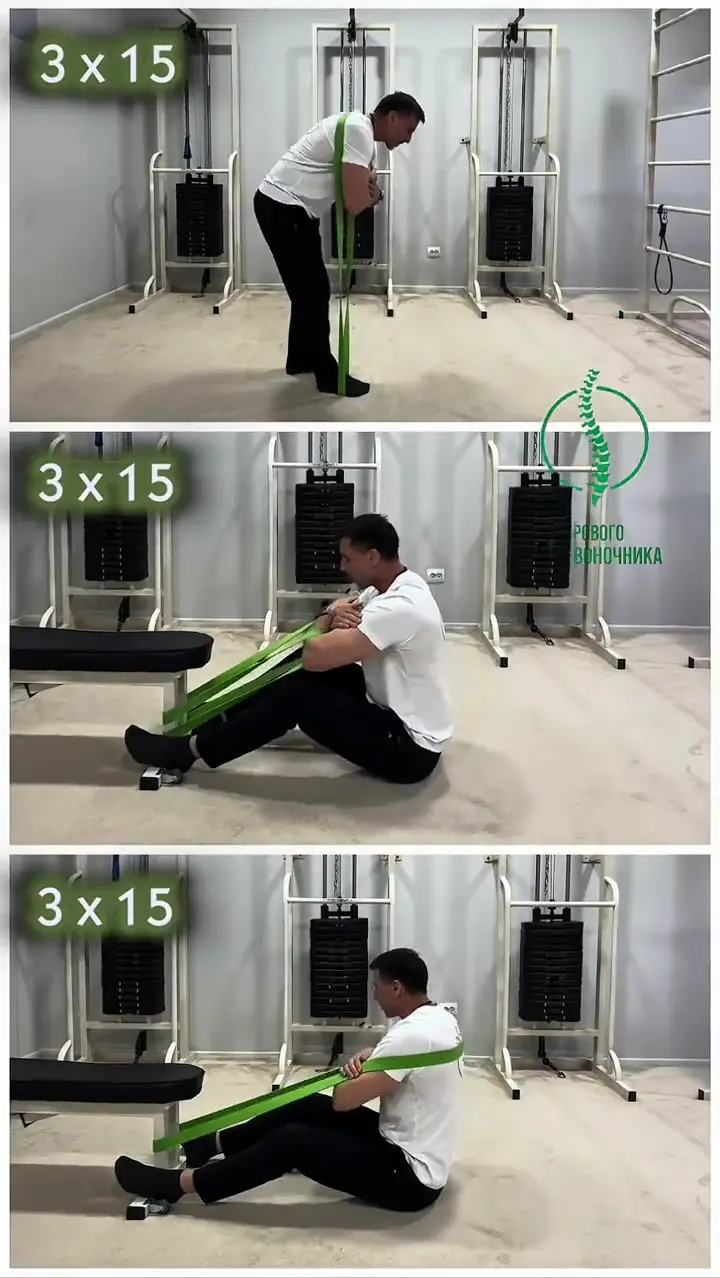
These exercises engage the glutes and deep lower-back muscles responsible for stabilizing the spine. Do 3 sets of 15 reps, slowly and without pain.
Standing on the band, bend forward with a straight back, pushing your hips back, then straighten up using your glutes.
Sitting on the floor with legs straight, pull the band to your waist, squeezing the shoulder blades and keeping your back straight.
In the same position, pull the band to your chest without rounding your lower back.
This is prevention for people who sit a lot. If your lower back already bothers you, it’s better to start after an assessment.
Videos from our specialists
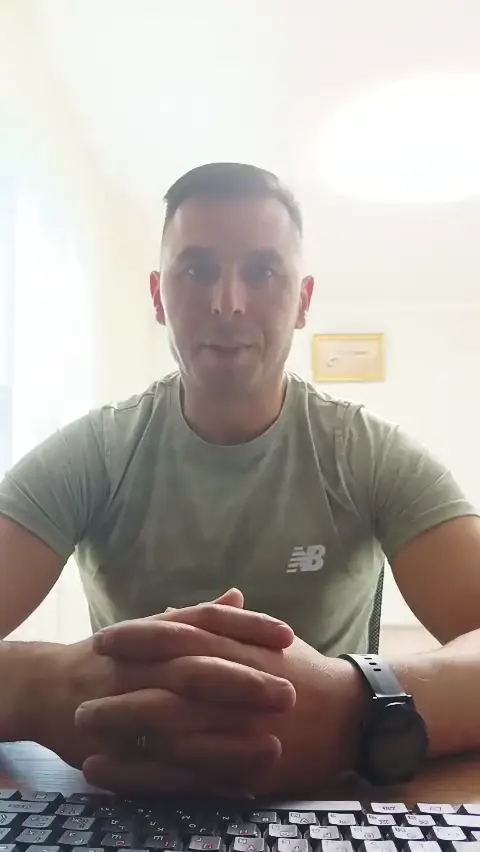
Why discs lose nourishment and what to do about it.
We explain the report in plain language and compare it with your symptoms.
We find overloaded and weakened muscles — the real source of pain.
Exercises on decompression equipment or in a wellness gymnastics group.
We gradually return your usual activity and teach you to protect your back without fear.
Leave a request and we will contact you to confirm your appointment and answer all your questions.
Two centers in Tashkent — choose the one convenient for you