Morning stiffness, pain in the groin or thigh when walking, trouble putting on socks and shoes? The hip loses mobility gradually — and it can be restored just as gradually. We work through movement: without impact, pills or injections.
Book an Assessment
When a joint hurts, people start moving less. But lack of movement is exactly what weakens the muscles and worsens the joint: cartilage has no blood vessels and is nourished only when the surrounding muscles work. That creates a vicious circle.
The hip is built for rotation and large ranges of motion. A sedentary lifestyle takes that work away: the surrounding muscles stiffen, the joint becomes rigid, and the load shifts to the lower back and knees. That’s why lower-back pain often starts not in the back but in the hips.
In hip osteoarthritis (coxarthrosis) the cartilage thins, and pain, stiffness and limited movement appear. The less a person moves because of pain, the faster the muscles that unload and stabilize the joint weaken.
We help restore movement safely with special exercises and decompression equipment — without impact on the joints. We strengthen the glutes and core, restore joint mobility, and improve blood flow and tissue nutrition.
Pay attention if you notice:
Pain when walking, climbing stairs or getting up from a chair.
You need to “warm up” after sleep or sitting for a long time.
It’s hard to bend and pull your leg toward you.
Your stride has shortened and a limp has appeared.
When the hip loses mobility, the lower back and knees get overloaded.
The joint clicks and the leg tires quickly.
Sharp pain after a fall, inability to put weight on the leg, swelling and fever — see a trauma doctor first.
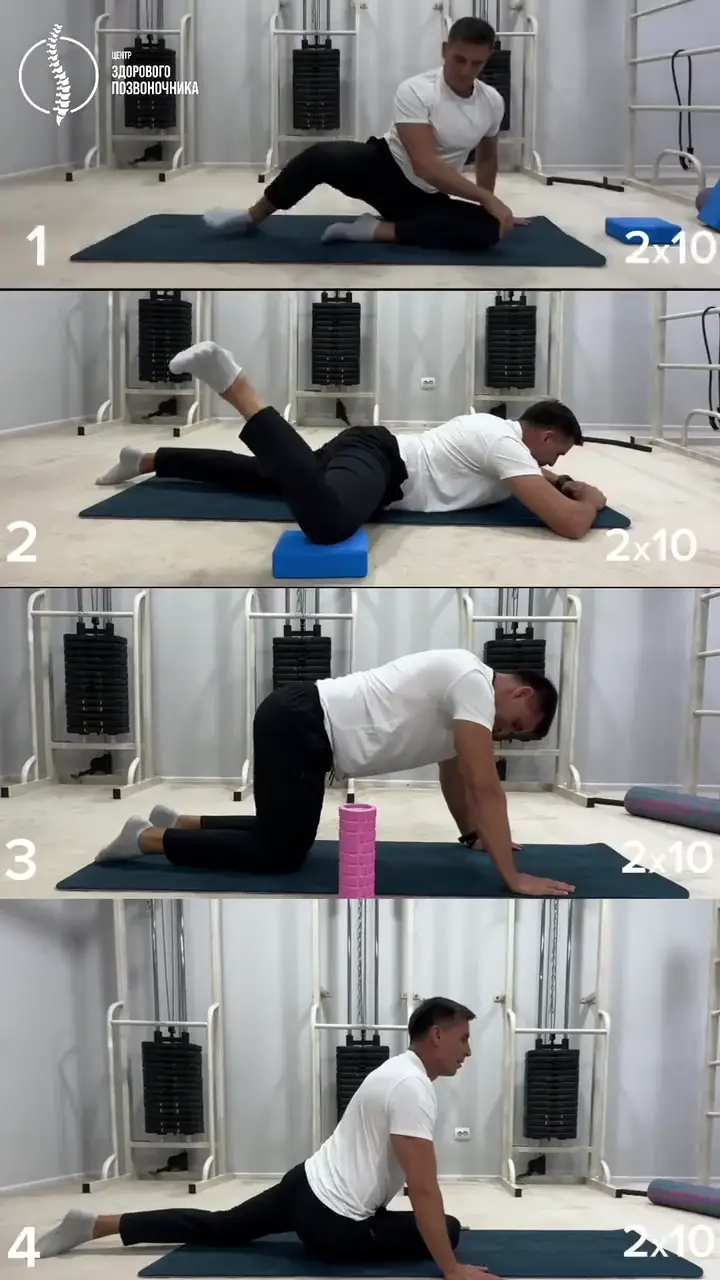
Simple exercises to prevent stiffness. Do 2 sets of 10 reps, slowly, without jerks, in a comfortable range. If you already have osteoarthritis or marked pain, the program should be chosen by a specialist.
Sitting on the floor with bent legs, lower your knees to one side and then the other. Restores rotation in the joint.
Lying face down with support on a block, gently rotate your bent lower legs outward. Improves internal hip rotation.
On all fours, lift your bent leg back and out to the side without arching your lower back. Activates the glutes.
In a kneeling lunge, gently shift your pelvis forward. Stretches the hip flexors that pull on the lower back.
These exercises are for healthy joints. With osteoarthritis and limited mobility, some of them may be unsafe — start after an assessment.
Short routines for the hips and pelvis
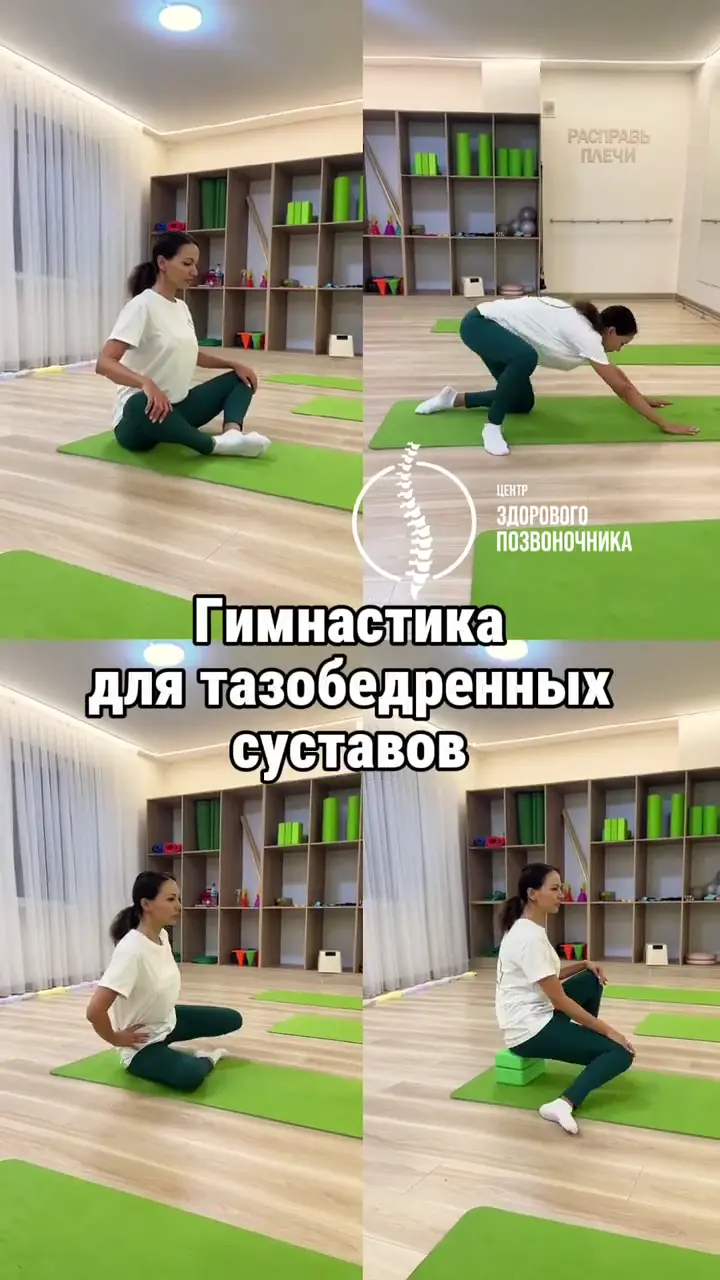
Gently reduces stiffness and improves movement control: 2–3 rounds of 6–8 reps per side.
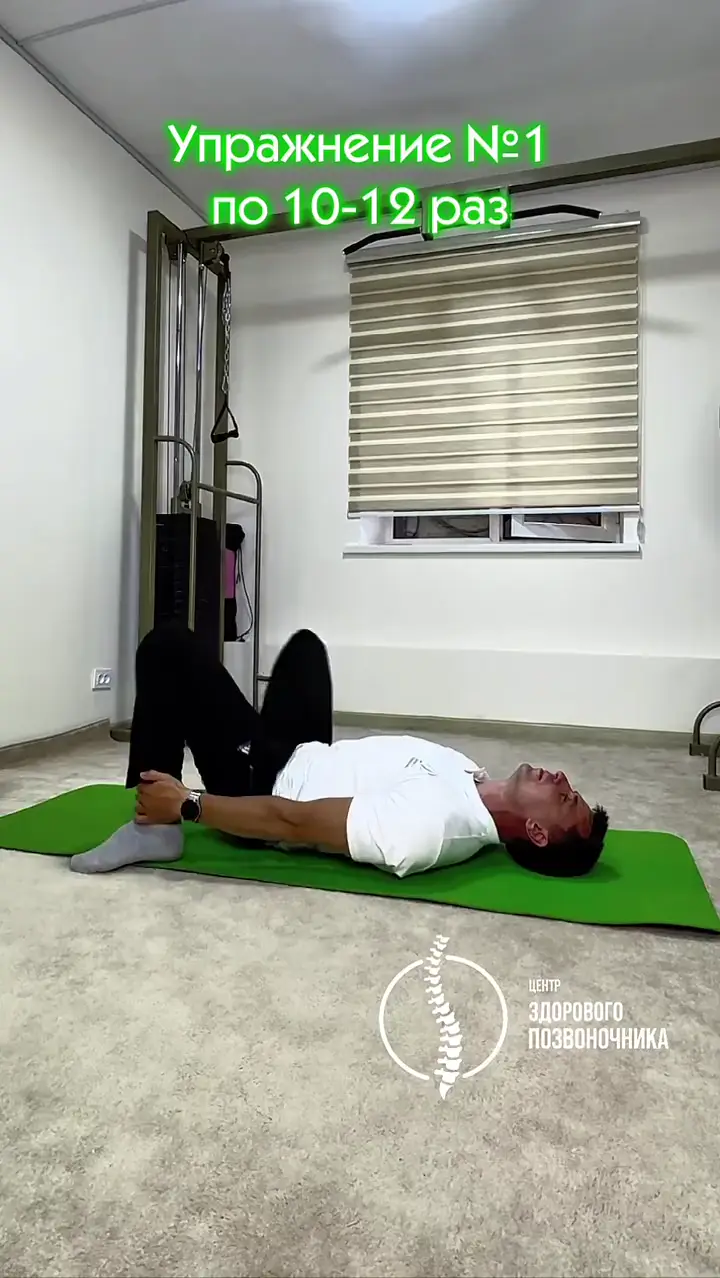
A 4-movement routine that improves trunk stability and hip mobility, reducing the load on the lower back.
We check hip, pelvis and lower-back mobility, review your images and find the cause of pain.
We choose exercises for the joint’s condition, your age and physical abilities.
You train in the kinesiotherapy hall on decompression equipment with an instructor.
We give home exercises so the joint stays mobile after the course.
Leave a request and we will contact you to confirm your appointment and answer all your questions.
Two centers in Tashkent — choose the one convenient for you