Does your lower back ache constantly while the arch keeps getting deeper? Hyperlordosis isn’t just a body shape — it’s a change in the position of the pelvis and spine that overloads joints, muscles and discs. We address the cause: muscle imbalance.
Book an Assessment
Lordosis is the natural forward curve of the lower spine. It absorbs load when you walk, run and jump. The problem begins when the curve becomes excessive — that’s hyperlordosis.
Most often because of weak abdominal and gluteal muscles. Weak abs disturb the balance between the front and back of the trunk, the pelvis tilts forward and the lower back arches more. A sedentary lifestyle, excess weight and a weak muscular corset add to the problem.
When the core muscles don’t help stabilize, the load on the lower back rises. This leads to pain, limited mobility and faster wear of the intervertebral discs, and can contribute to protrusions and herniations.
Correction starts not with a brace or massage, but with restoring proper muscle function and movement habits. We perform a functional assessment and create an individual program — without surgery or injections.
Look at yourself from the side and from behind in a mirror. Pay attention if:
The lower back arches noticeably forward, especially when standing.
The belly sticks out even without excess weight.
The buttocks stick out and the front of the pelvis is lowered.
One side of the pelvis or waist is higher — a sign of pelvic obliquity.
The lower back tires with prolonged standing and walking.
The front of the thigh feels “pulled” and it’s hard to fully straighten up.
The wall test with a hand behind your lower back is only a hint, not a diagnosis. The number of “fingers” decides nothing — a functional assessment of movement and muscles does.
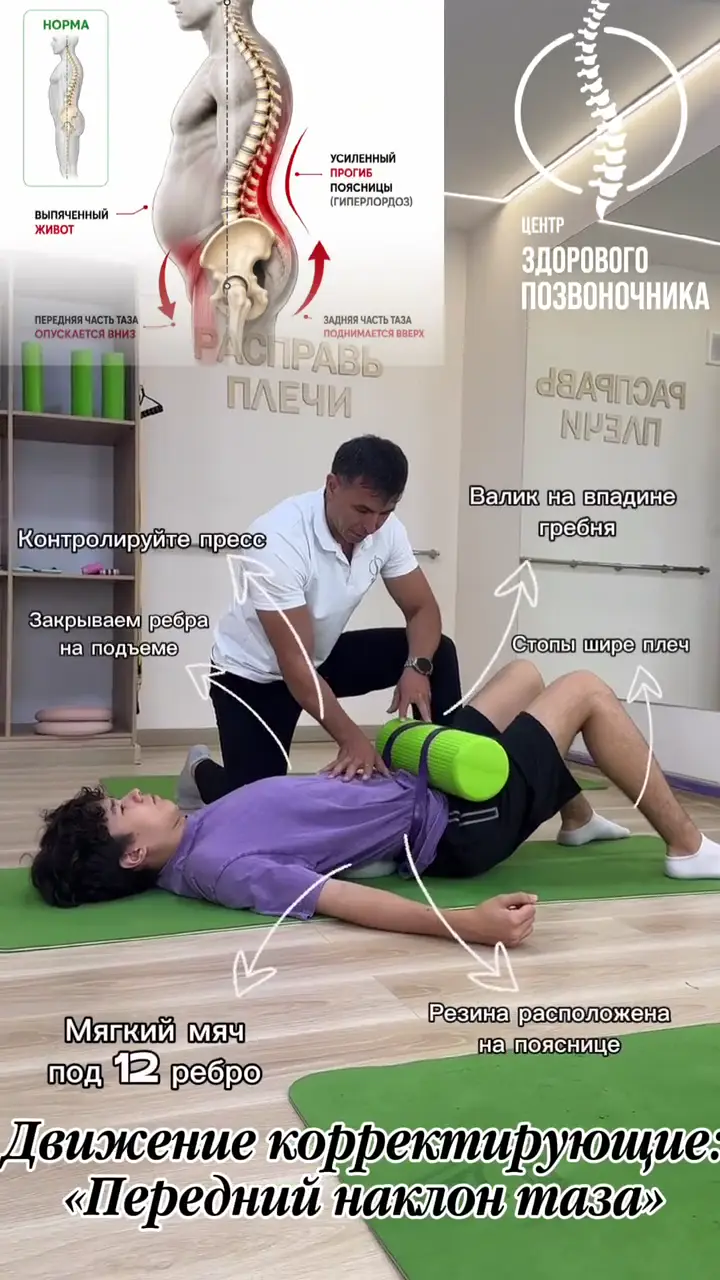
A corrective exercise from our sessions. Precise technique matters more than strength, so the first time it’s best done under an instructor’s supervision.
Lie on your back with knees bent and feet wider than shoulder width.
A soft ball under the lower ribs, a roller at the iliac crest, a band at the lower back.
As you lift, lower the ribs while exhaling gently — the lower back must not arch.
Keep the abdominal muscles engaged throughout the movement.
This movement restores balance between the abs, glutes and lower back. With back pain, the program is selected by a specialist after an assessment.
Short videos from our sessions
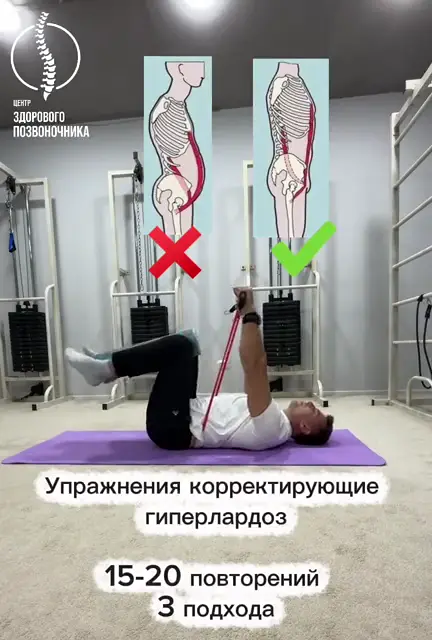
A movement to strengthen the abs and glutes: 15–20 reps, 3 sets.
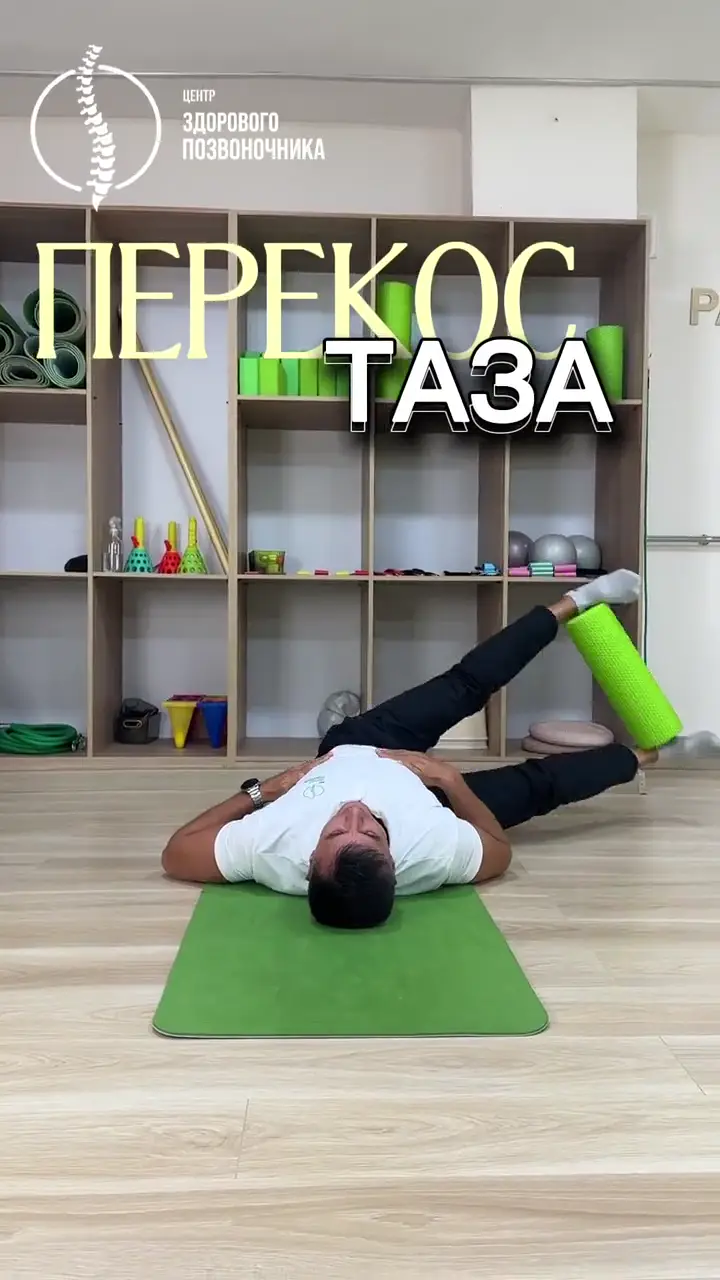
For correcting and preventing pelvic obliquity. Save it and do it regularly.
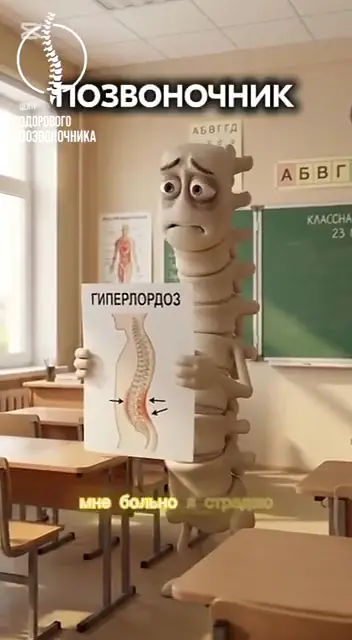
Hyperlordosis isn’t a “disease in itself” but a signal of disturbed muscle function. A child’s body is flexible and responds well to correction.
We assess pelvis and spine position, core strength and hip mobility.
We choose exercises that strengthen weak muscles and stretch overloaded ones.
The instructor monitors technique — especially important with hyperlordosis.
We teach you to stand, sit and move correctly so the arch doesn’t return.
Leave a request and we will contact you to confirm your appointment and answer all your questions.
Two centers in Tashkent — choose the one convenient for you