Lower back hurts, acute pain won't go away, aching with every movement? At the Healthy Spine Center we eliminate the root cause of pain through safe movement — kinesiotherapy, wellness gymnastics, and massage.
Book a Consultation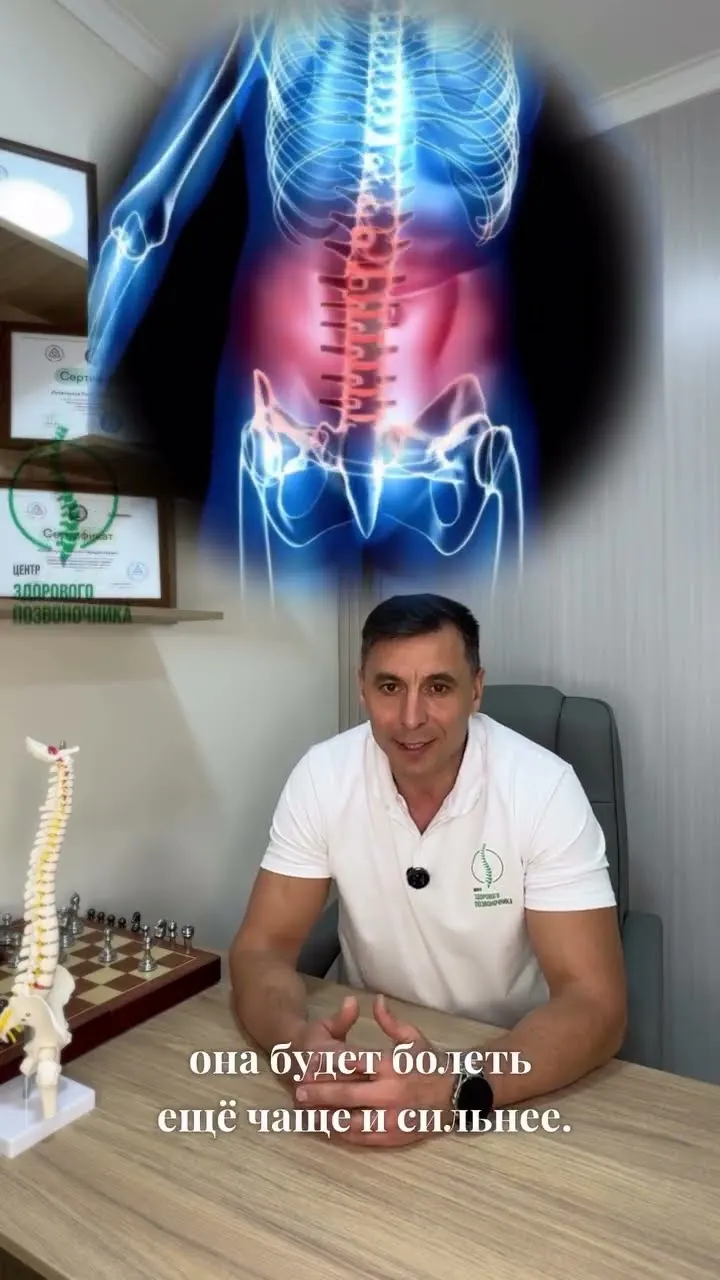
Lower back pain is not an accident. And it's not «age» either. It's a signal that your body can no longer cope with the load.
The problem isn't in the spine. The problem is in the muscles. When muscles: — weaken — become stiff — stop working properly they no longer support the spine. The load starts pressing on discs and joints. And pain appears.
Because nobody works with the cause. A person: — moves less — is afraid of exertion — takes painkillers But at the same time the muscles keep getting weaker. And every day the situation gets worse.
Not rest. And not «just push through». But the right kind of load. When exercises: — without axial pressure — with movement control — with gradual activation of muscles the lower back starts to recover.
At the Healthy Spine Center we don't relieve pain temporarily. We remove its cause.
Lower back pain rarely appears «out of nowhere». Pay attention if you notice:
Your lower back aches after long hours at a desk or behind the wheel, and it’s hard to stand up right away.
In the morning you need time to loosen up and straighten your back.
Your back aches after cleaning, lifting something heavy or standing for a long time.
It’s difficult to bend forward, put on shoes or twist your torso.
Discomfort radiates into the sacrum, the buttock or down the back of the thigh.
Painkillers bring relief, but after a while it all returns.
Numbness in the groin area, problems with urination, increasing leg weakness, or severe pain after a fall or with a high temperature — see a doctor urgently.
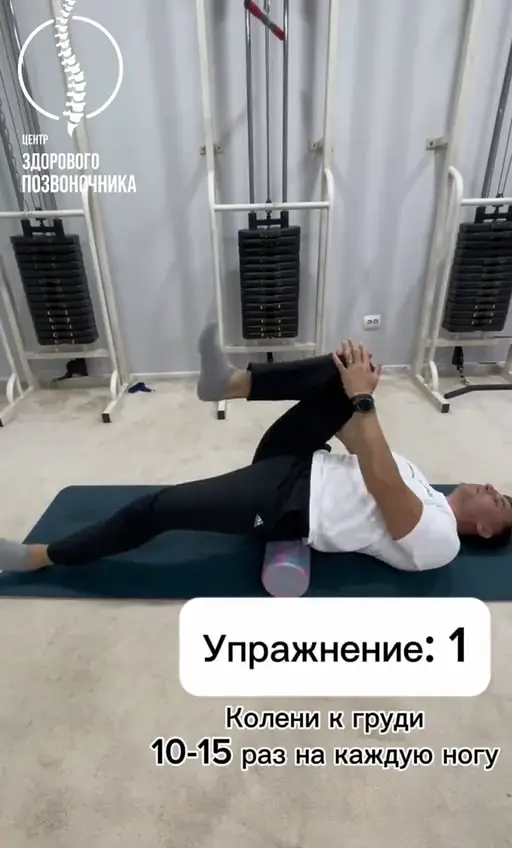
A routine from our sessions: we release excess tension, activate weak muscles and restore pelvic mobility. Almost all exercises are done lying on your back with a roller under the pelvis. Do 10–15 reps, slowly and without pain.
Lying on your back, pull one knee to your chest with your hands, alternating legs — 10–15 times per leg. Gently relaxes the lower back and sacrum.
Raise one bent leg at a time, then squeeze a ball between your knees and pull both legs toward your chest. Engages the abdominal and inner thigh muscles.
Lying on your back, extend one leg forward at a time against the band’s resistance. Lying face down with a band around your ankles, move one leg out to the side. Strengthens the glutes, which take load off the lower back.
Lying on your back with a ball between your knees, slowly lower your knees to one side, then the other — 10–15 times each. Restores mobility to the pelvis and lower back.
If the pain is acute, radiates into your leg or gets worse during the exercises — stop. A specialist will select a safe load after an assessment.
Short videos from our sessions
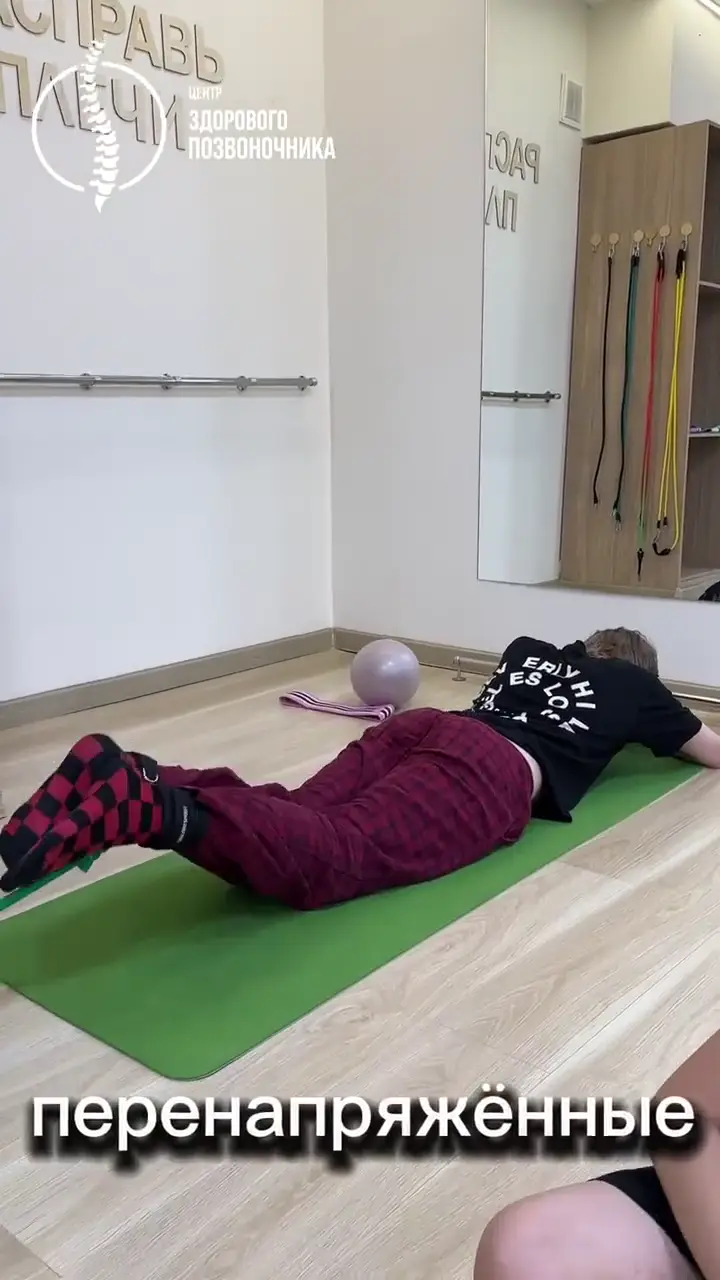
Why the curve in the lower back increases and what to do about it. An excessive curve is a common cause of lower back overload.
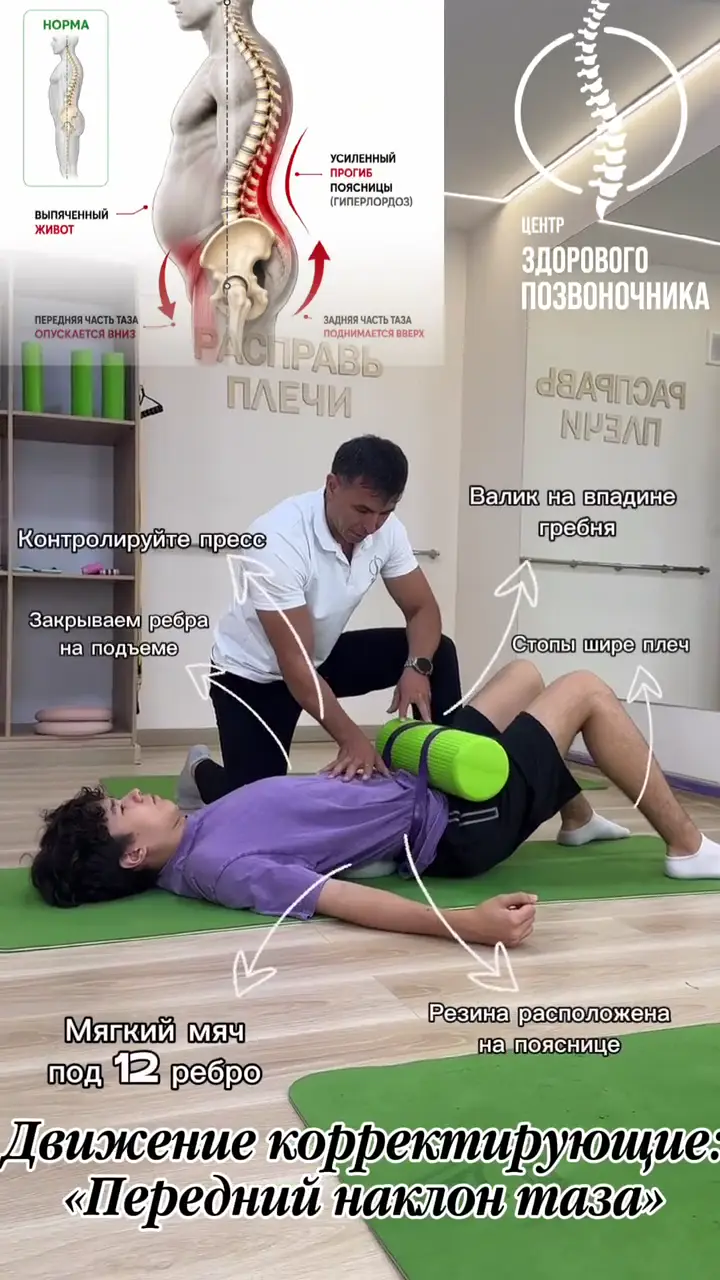
Precise technique for an exercise that corrects anterior pelvic tilt, which increases the load on the lower back.
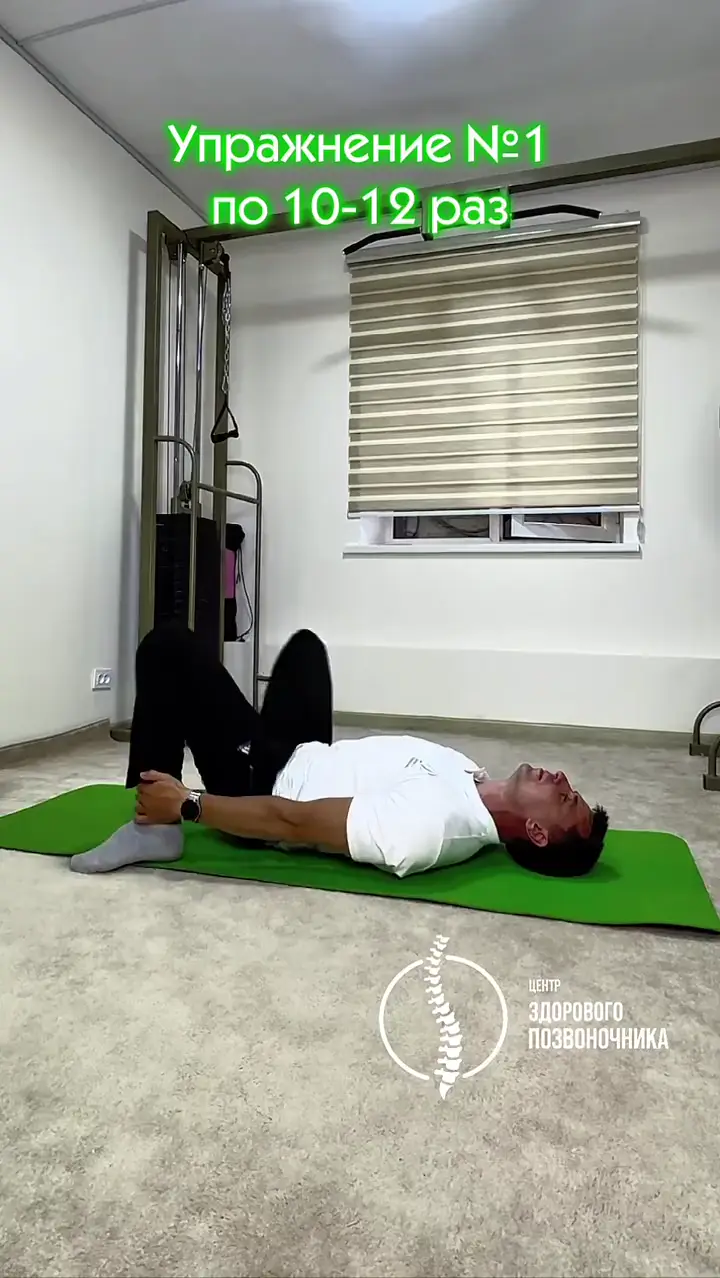
Core stability and hip mobility — a foundation that helps take load off the lower back.
I was very surprised by the result — after just the 10th session, no back pain at all… Huge thanks to trainer Rustam, thanks to his persistence I achieved this result. I advise everyone who hasn’t tried it yet: don’t put it off.
A consultation, a review of your MRI and other test results, myofascial diagnostics and functional tests — we find which muscles are overloading your lower back.
We select wellness gymnastics or kinesiotherapy on special decompression machines — with no axial load on the spine.
The basic course is 20 sessions in the kinesiotherapy hall or 30 sessions of wellness gymnastics. The instructor monitors your technique, and we adjust the load based on how you feel and your progress.
We give you home exercises and recommendations: how to sit, lift heavy things and support your lower back after the course.
Leave a request and we will contact you to confirm your appointment and answer all your questions.
Two centers in Tashkent — choose the one convenient for you