Headaches, dizziness, numb hands, a stiff neck or lower-back pain — and it all comes back after pills and injections? With osteochondrosis it’s important to work not only with pain but with its cause — the muscles that have stopped supporting the spine.
Book a Consultation
You can mask symptoms for months with pills, injections and procedures, but if you don’t understand why they appeared, the problem will keep coming back. The most valuable thing we lose in such situations is time.
Osteochondrosis refers to age-related and degenerative changes in the intervertebral discs and vertebrae. Discs have no blood vessels and get nutrients from the surrounding muscles. When the muscles stop working fully, the discs are poorly nourished and lose elasticity, and the spine loses support.
MRI, CT and X-rays show the state of the vertebrae and discs, but not the muscles — and blood vessels and nerves run through them. Impaired blood flow in the neck and shoulder muscles can cause numb hands, headaches and dizziness. Medication relieves the symptom but doesn’t restore muscle function, so the relief is temporary.
We perform myofascial diagnostics, find muscles that work incorrectly, and select exercises that restore blood flow, tissue nutrition and the muscular corset. No pills or injections — just proper movement.
Symptoms depend on the part of the spine. Pay attention if you have:
Pain at the back of the head, a “heavy” head, especially after computer work.
Tingling, numb fingers, weakness in the hands.
It’s hard to turn your head; crunching and shoulder tension.
Aching or sharp pain; hard to straighten up after bending.
Pulling pain along the buttock and thigh, numb foot.
Tiring quickly, poor sleep, back tension by evening.
Increasing weakness in an arm or leg, loss of sensation in the groin area, bladder problems, or sudden severe pain — see a doctor urgently.
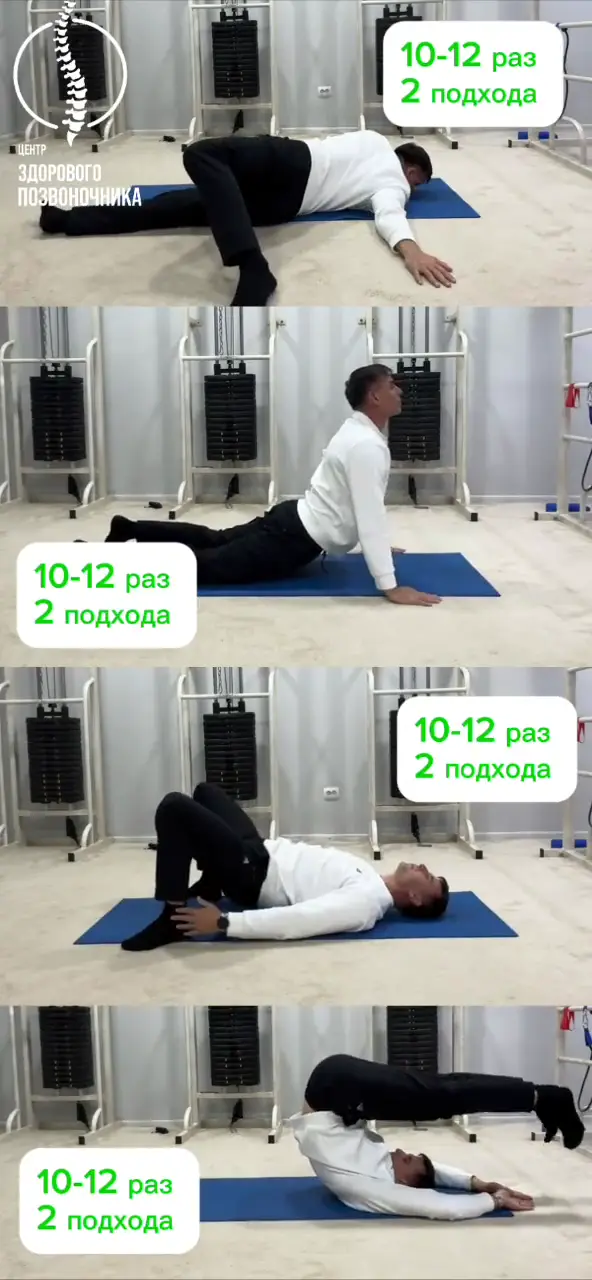
A short morning routine that gently “switches on” the body, stretches the deep layers of the spine and improves disc nutrition. Do 10–12 reps for 2 sets, slowly and within a comfortable range.
Lying on your back, reach your arms overhead and stretch your whole body.
From a hands-supported position, lift your hips up, lengthening your back.
Lying on your back, gently lift and lower your pelvis, engaging the glutes.
Gently stretch your back without pain. With cervical osteochondrosis, avoid movements that load the neck.
The best help is prevention. If your back or neck already hurts, start after a consultation: a specialist will choose safe exercises.
Explanations from our specialists
Why movement isn’t forbidden with osteochondrosis, protrusions and hernias, but properly directed.
Don’t guess whether exercise is allowed — at the assessment we’ll look at your specific case.
We review your complaints and images and perform myofascial diagnostics.
We choose exercises for the affected part of the spine.
Wellness gymnastics or kinesiotherapy under an instructor’s supervision.
We teach you to support your spine so flare-ups don’t return.
Leave a request and we will contact you to confirm your appointment and answer all your questions.
Two centers in Tashkent — choose the one convenient for you